How Does a Hand Learn to Walk?
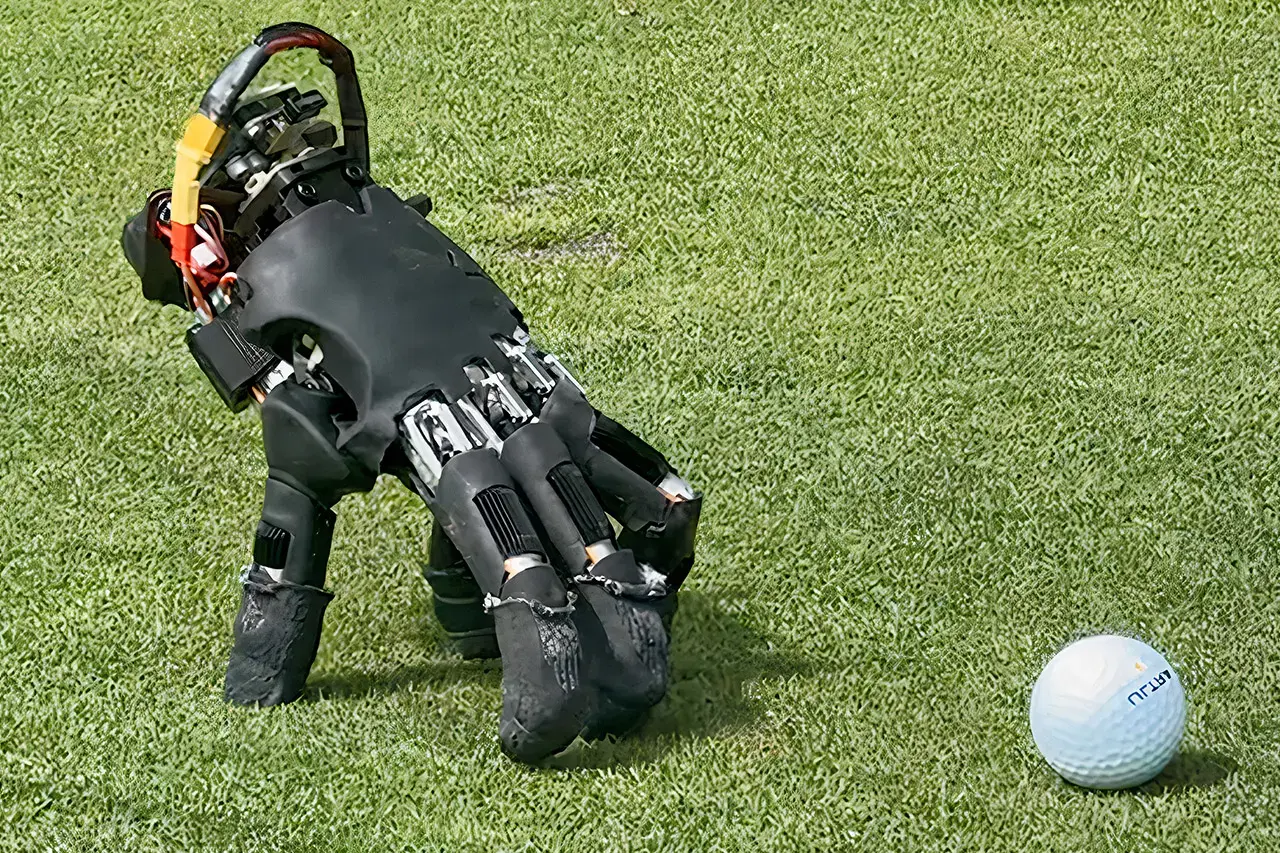
Researchers at ETH Zurich’s Soft Robotics Lab transformed a commercial WUJI prosthetic hand into a walking robot by reprogramming its fingers to function as legs. The project, led by Amirhossein Kazemipour, Hehui Zheng, and Robert Katzschmann, repurposed a store-bought right-hand prosthesis with five articulated fingers into a quadruped-like walker. The team demonstrated the device moving across flat surfaces using coordinated finger motions, mimicking the gait of a small creature. The work was presented in September 2026 as part of ongoing exploration into adaptive soft robotics using everyday materials.
Breaking news
 Chinese Firms Secure Over One Million Nvidia Graphics Cards for AI Development
 Accenture Market Cap Surges to $130B Ahead of Investor Day
 Paris Startup Naboo Rebrands to Target Finance and Procurement Teams
 Improving Data Integrity in Automated Document Processing
The WUJI hand, originally designed for human amputees, features tendon-driven fingers capable of precise flexion and extension. By reversing the control logic—activating finger joints in sequences typically used for grasping—the researchers created alternating push-and-lift motions that propelled the device forward. Sensors embedded in the palm provided feedback on ground contact, enabling basic balance adjustments. No structural modifications were made to the hand; all changes were achieved through software reconfiguration and external actuation. The team likened the movement to the eerie, loping gait of Thing from The Addams Family, hence the nickname. This approach highlights how existing prosthetic hardware can be reused for locomotion tasks without mechanical redesign.
Can Everyday Prosthetics Become Robot Platforms?
The walking behavior emerged from reprogramming the hand’s motor controllers to treat finger joints as actuators for leg-like motion. Instead of closing to grip, the fingers extend downward to push against the surface, then retract to lift—creating a crawling pattern. The thumb and little finger often acted as outer supports, while the middle three fingers provided central thrust. Control algorithms adjusted timing and force based on real-time contact feedback, allowing the device to navigate minor surface variations. Experiments showed stable movement at speeds up to 5 centimeters per second on smooth floors. The researchers emphasized that the hand’s inherent flexibility and compliance were key to absorbing shocks and maintaining stability during motion.
This experiment suggests that mass-produced prosthetic hands, designed for dexterity and safety, may serve as accessible bases for soft robotic prototypes. By leveraging existing ergonomic designs and actuation systems, developers could reduce costs and accelerate experimentation in fields like search-and-rescue or educational robotics. The team noted that while the current version requires external power and control, future iterations could integrate miniature batteries and onboard processors. They also highlighted the importance of rethinking actuator functions—what grasps today might walk tomorrow. The project underscores a broader trend in robotics: adapting familiar objects for unexpected uses through software ingenuity rather than hardware overhaul.
Was the WUJI hand modified physically for this project? No, the researchers made no physical changes to the hand; all walking behavior was achieved through software reprogramming of its existing motors and sensors.
Frequently Asked Questions
How long can the finger-legged robot operate? In tests, the device moved steadily for several minutes before overheating in the actuators, limited by the original prosthetic’s power dissipation design.
Could this method work with other prosthetic limbs? The team believes similar principles could apply to feet or arms, though hands offer unique advantages in finger articulation and compliance for uneven terrain.