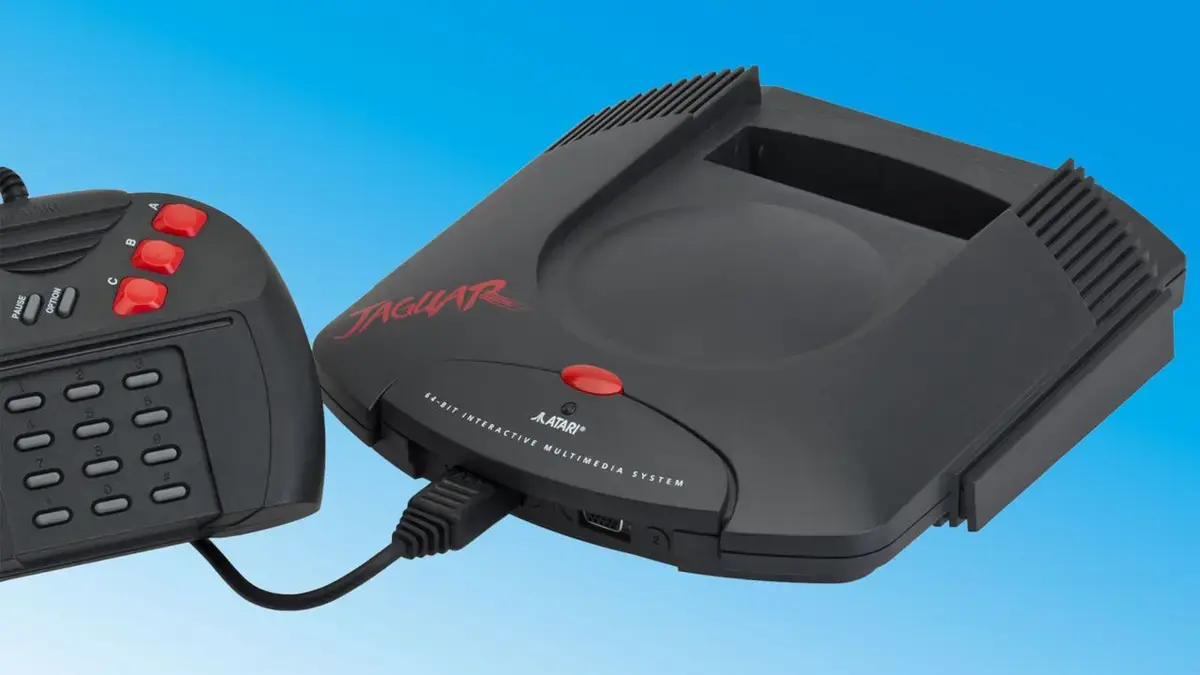
Engineering a 1990s Beast
A hobbyist developer has successfully ported a Linux kernel to the Atari Jaguar, the 1993 console that claimed the title of the first 64‑bit gaming system. The effort was completed in early July 2026 and demonstrates that the Jaguar’s 13.3 MHz Motorola 68000 CPU, its Tom and Jerry co‑processors, and 2 MB of RAM can still run a modern operating system.
Breaking news
 Eufy Unveils Local AI Home Security Ecosystem at IFA
 The Rapid Evolution of Data Center Security in the AI Era
 The High-Voltage Risks Facing Modern AI Data Centers
 Apple’s New CEO Renames Lake Ontario To Lake America In Maps App
The project required deep hardware knowledge and extensive code rewrites. The developer over‑clocked the main CPU, created custom drivers for the graphics and sound chips, and stripped the kernel to fit the limited memory. The Jaguar’s reputation for being difficult to program made the achievement notable, and the port now allows hobbyists to explore Linux on a legacy platform.
The Jaguar’s architecture was never designed for a full operating system. Its dual‑processor layout, with the Tom chip handling video and the Jerry chip handling audio, posed synchronization challenges. The developer wrote a lightweight scheduler that balances tasks between the 68000 core and the co‑processors, ensuring the system remains responsive.
Can a Retro Console Really Host Modern Linux?
Memory constraints forced the use of a minimal kernel configuration. By disabling non‑essential subsystems, the kernel footprint was reduced to under 1.5 MB, leaving room for a tiny root filesystem. The over‑clocked CPU now runs at roughly 20 MHz, providing enough headroom for basic command‑line utilities and simple networking.
Critics argue that a console from the early ’90s cannot support contemporary software demands. Yet the port demonstrates that Linux’s modularity allows it to adapt to extreme hardware limits. The developer notes that while graphical performance is modest, the system can run text editors, compilers, and even a lightweight web server.
The experiment also highlights the educational value of retro hacking. By exposing the Jaguar’s inner workings, the project offers a hands‑on platform for learning low‑level programming, memory management, and hardware interfacing. It may inspire similar ports to other forgotten devices, preserving computing history.
The Linux‑enabled Jaguar opens new possibilities for collectors and developers alike. It could become a niche platform for hobbyist projects, retro‑gaming demonstrations, or even small‑scale IoT prototypes. As the community builds tools and documentation, the Jaguar may see a modest resurgence, proving that even failed hardware can find new life decades later.
Frequently Asked Questions
What version of Linux runs on the Jaguar? The port uses a trimmed Linux 5.15 kernel, compiled with custom patches to support the Jaguar’s unique hardware layout.
Is the Jaguar usable as a regular Linux machine? It functions as a basic command‑line system. Graphics are limited, and heavy applications will not run, but it is stable for development and learning.
Can other retro consoles be ported to Linux? Yes, similar projects exist for the Sega Dreamcast and PlayStation 1. Success depends on available documentation and the ability to write low‑level drivers.