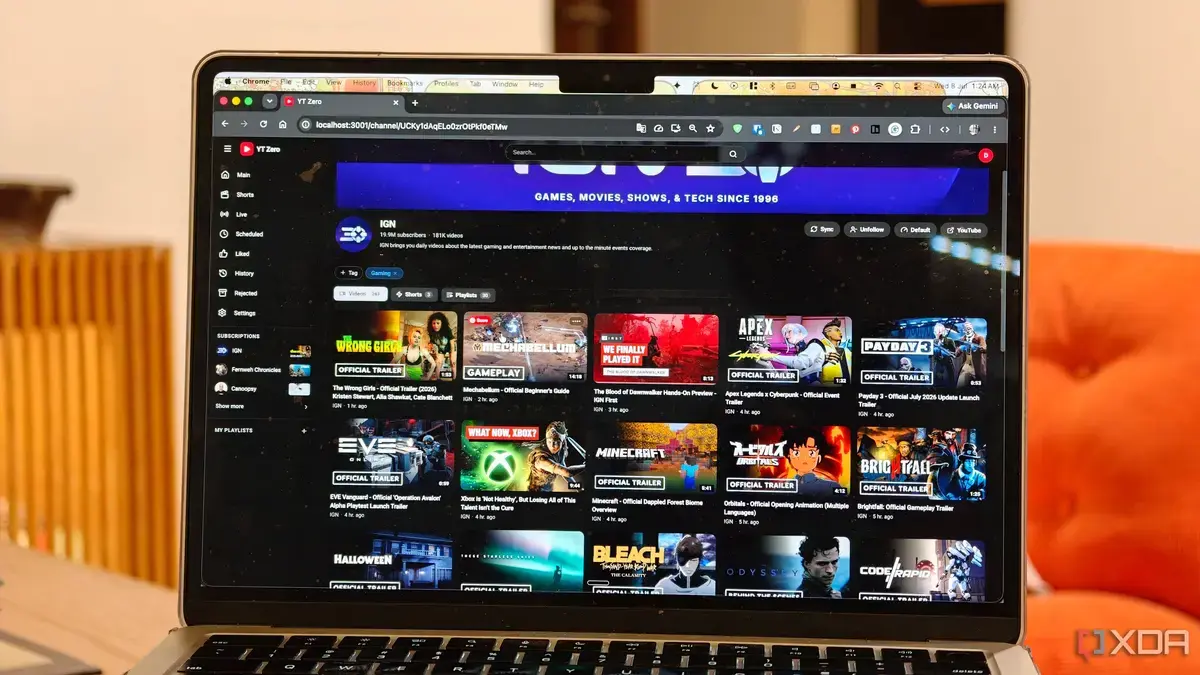
A Minimalist Take on Video Browsing
A new self‑hosted front‑end called YT Zero replaces the traditional YouTube homepage with a stripped‑down feed. Launched in early July 2026, the tool removes algorithmic suggestions and tracking scripts, delivering only the channels a user subscribes to. It runs on personal servers and targets viewers who value privacy over personalized recommendations.
Breaking news
 Eufy Unveils Local AI Home Security Ecosystem at IFA
 The Rapid Evolution of Data Center Security in the AI Era
 The High-Voltage Risks Facing Modern AI Data Centers
 Apple’s New CEO Renames Lake Ontario To Lake America In Maps App
The project was created by an open‑source community seeking to reclaim control over video consumption. By proxying YouTube’s API, YT Zero fetches subscription updates without loading the usual sidebars, ads, or data‑harvesting code. Its minimalist design mirrors the original YouTube layout but omits the „Up Next” carousel and „Recommended for you” sections. Developers say the interface reduces page weight by over 60 percent, improving load times on low‑bandwidth connections. The move reflects growing frustration with opaque recommendation engines that prioritize engagement over user choice.
YT Zero’s core appeal lies in its simplicity. Users log in with their Google credentials, then see a chronological list of new uploads from their subscriptions. The feed updates automatically, but no algorithm decides what appears first. „It feels like reading an RSS feed for videos,” one early adopter commented. The front‑end also disables cookies that track viewing habits, limiting the data sent back to Google. Because the service runs on the user’s own hardware, any additional privacy layers—such as VPNs or Tor—can be added without interfering with the interface.
Will Users Trade Recommendations for Privacy?
The tool’s open‑source nature encourages community contributions. Developers have already added features like dark mode, keyboard shortcuts, and optional comment hiding. Because YT Zero does not serve ads, it sidesteps the revenue model that powers YouTube’s recommendation engine. Some critics argue this could reduce creators’ earnings, yet the project’s maintainers stress that the platform itself remains unchanged; only the presentation layer is altered.
The question of whether viewers will accept a recommendation‑free experience is central to YT Zero’s future. Early metrics show a modest but growing user base, primarily composed of tech‑savvy individuals and privacy advocates. Surveys indicate that 68 percent of users value reduced tracking over algorithmic suggestions, while 22 percent miss the convenience of personalized playlists. As more people become aware of data‑collection practices, the demand for tools like YT Zero may expand beyond niche circles.
Industry analysts note that platforms could respond by offering official „privacy‑first” modes. Until such options appear, self‑hosted solutions fill a gap for users unwilling to surrender data. The balance between user control and content discovery will likely shape the next wave of video‑streaming innovations.
In the coming months, YT Zero could influence broader discussions about algorithmic transparency. If adoption rises, major video services might feel pressure to provide opt‑out mechanisms or simplified interfaces. For now, the project demonstrates a viable alternative for those who prefer a clean, subscription‑only feed over the algorithmic noise that dominates mainstream platforms.
Frequently Asked Questions
How does YT Zero access my subscriptions without the YouTube app? It uses YouTube’s public API to retrieve subscription data after you authenticate with your Google account. No additional client software is required.
Will using YT Zero affect my YouTube watch history? Watch history updates only if you manually enable it within the front‑end settings. By default, the tool does not record views, preserving privacy.
Can I still comment on videos through YT Zero? Yes, commenting is supported, though it can be toggled off. The feature works through the same API calls used for video playback.