A Small Revenue Base Amidst High Expectations
Agility Robotics, the developer of the Digit humanoid robot, has officially become the first US-based company focused on humanoid robotics to go public. The Oregon-based firm completed its merger with Churchill Capital Corp XI on Wednesday. Shares are scheduled to begin trading on the Nasdaq exchange on November 22. This milestone marks a significant entry for humanoid technology into the public stock market.
Breaking news
 Dropbox to Buy Tigris Data for $350 Million
 Mathematician Uses Algorithms to Predict and Capture Total Solar Eclipses
 Zipline Raises $1.5B at $21.5B Valuation
 DocuSign launches global general availability for contract AI workflows
The company chose a Special Purpose Acquisition Company, or SPAC, route to reach the public markets. This method involves merging with a listed shell company rather than pursuing a traditional initial public offering. Agility utilized this strategy to accelerate its timeline for becoming a publicly traded entity. The merger provides immediate access to capital markets without the lengthy process of a standard IPO. This approach allows the firm to secure funding while maintaining operational momentum.
Despite its high-profile status, Agility’s financial scale remains modest. The company reported revenue of just $1.8 million for the previous year. This figure highlights the early stage of commercial adoption for humanoid robots in industrial settings. Investors are betting on future growth rather than current earnings. The market value of the company now far exceeds its recent sales figures. This disparity reflects strong confidence in the long-term potential of robotics.
Can Niche Robotics Survive Public Scrutiny?
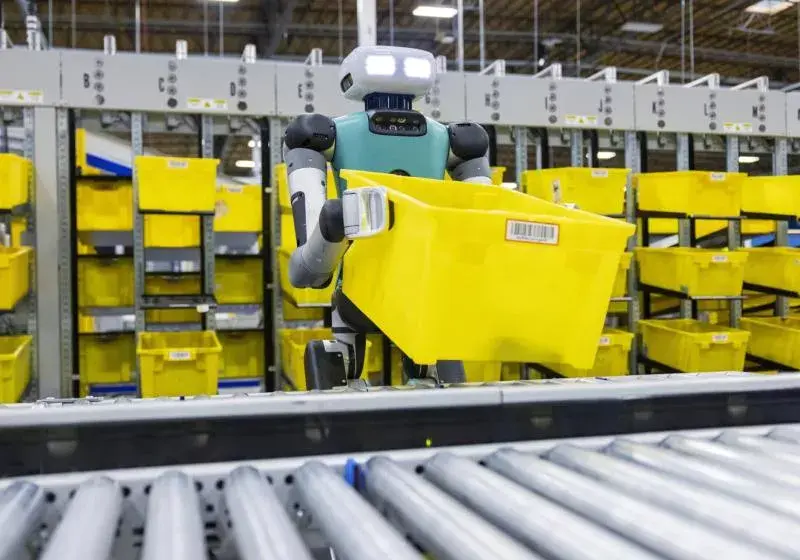
Digit robots are already deployed in various environments, including Amazon warehouses. These machines assist with logistics tasks such as moving boxes and pallets. The technology aims to reduce physical strain on human workers. By automating repetitive lifting and transport, Agility seeks to improve efficiency in supply chains. The company has partnered with major logistics providers to test these capabilities. Real-world data from these deployments informs further development of the platform.
Going public introduces strict reporting requirements and heightened investor scrutiny. Agility must now demonstrate a clear path to profitability. The broader robotics sector faces challenges in scaling production costs. Manufacturing humanoid robots requires advanced engineering and expensive components. The company must balance R&D investments with the need to show financial discipline. Public markets often demand quick results, which may conflict with long-term technical development.
The success of this merger will influence other robotics firms considering public listings. If Agility can sustain investor interest, it may open the door for similar ventures. However, the low revenue base poses a risk if growth does not accelerate. Analysts will closely monitor quarterly reports for signs of scaling. The stock price will serve as a real-time indicator of market sentiment.
Frequently Asked Questions
How did Agility Robotics go public? Agility merged with Churchill Capital Corp XI, a special purpose acquisition company. This SPAC merger allowed the firm to list on Nasdaq without a traditional IPO process.
What is the current revenue of Agility? The company generated $1.8 million in revenue last year. This modest figure contrasts with its high valuation as a public entity.
Where are Digit robots currently used? Digit robots operate in industrial settings, including Amazon warehouses. They perform logistics tasks like transporting goods to boost operational efficiency.