How the Portable DLL Achieves Half the Latency
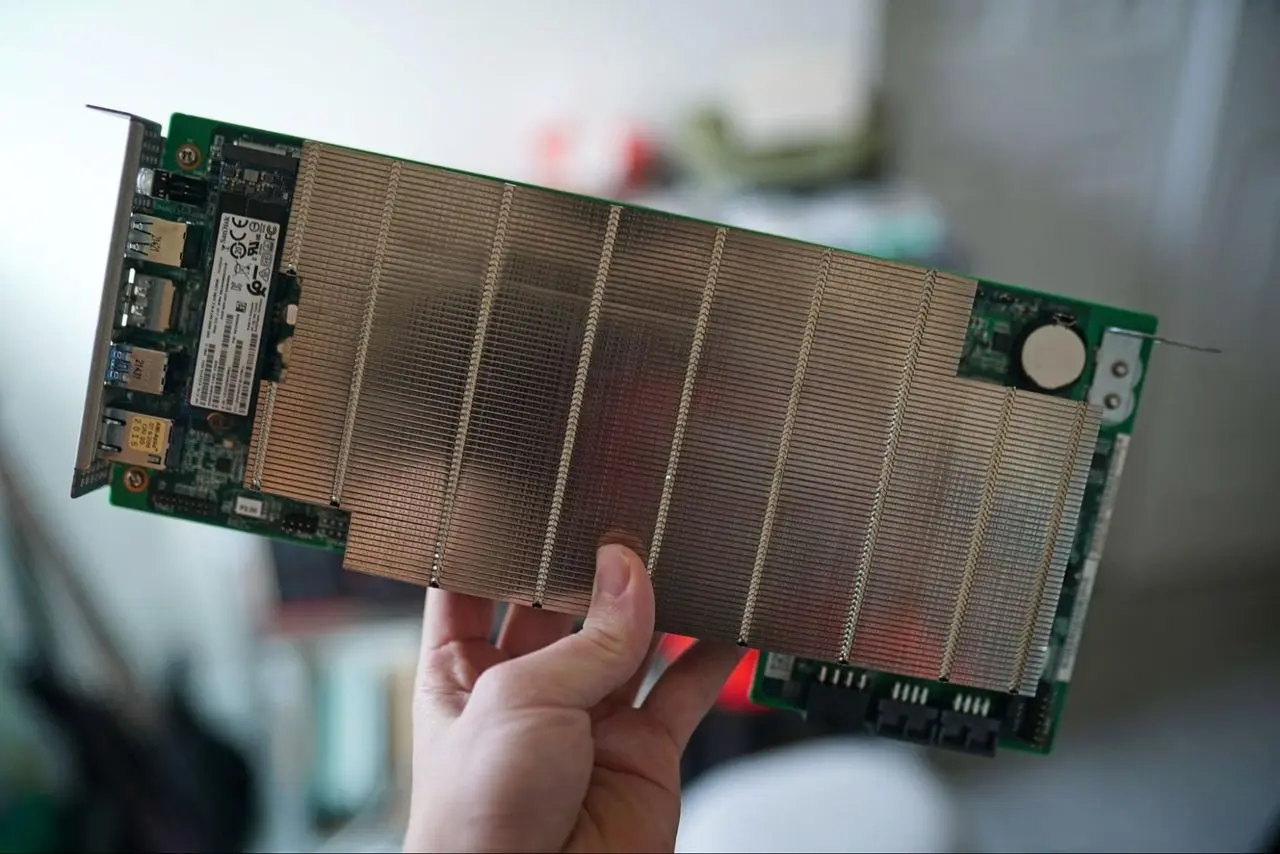
Modders have achieved a significant performance boost for FidelityFX Super Resolution 4 on AMD’s BC-250 APU, a chip derived from the PlayStation 5’s hardware and originally designed for cryptocurrency mining. By developing a portable FidelityFX DLL, they reduced 1440p upscaling time from 11.51 milliseconds to just 5.92 milliseconds, effectively halving the rendering cost while maintaining byte-identical output. The breakthrough was demonstrated in early September 2026 and shared widely among enthusiast communities focused on low-cost, high-efficiency upscaling solutions.
Breaking news
 Canonical’s Web Presence Hit by Second DDoS Assault This Year
 Loops AI Secures $3.5 Million to Power a New AI Operating System for E‑Commerce
 Winverse AI Secures Tens of Millions in Seed Funding from DeepSeek and Long‑Z
 Google Adds Pixel 9 Series to Certified Refurbished Store
The BC-250 APU, based on AMD’s RDNA 2 architecture and repurposed from console silicon, has found a niche in the mining and budget computing markets due to its low power draw and availability. Despite not being marketed for gaming, its integrated GPU can run modern upscaling techniques when optimized. Modders leveraged the open nature of FSR 4’s software stack to create a lightweight, portable DLL that bypasses unnecessary driver overhead and streamlines shader execution. This approach allows the APU to deliver smoother frame rates in upscaled gaming scenarios without requiring hardware changes or licensed software packages.
Can This Approach Work on Other Low-Power APUs?
The key to the performance gain lies in eliminating redundant memory transfers and optimizing wavefront utilization within the BC-250’s compute units. By recompiling FSR 4’s core algorithms with tighter register usage and minimizing pipeline stalls, the modded DLL reduces idle cycles during the upscaling pass. Testing conducted at 1440p resolution showed consistent frame time improvements across multiple titles, with the 5.92 ms result representing an average under Vulkan. Importantly, the output remains pixel-perfect compared to the official FSR 4 implementation, ensuring no loss in image quality.
The success on the BC-250 raises questions about scalability to similar AMD APUs, such as those used in handheld PCs or thin clients. Early experiments indicate that the same DLL can be adapted to the Ryzen Z1 series and older Ryzen 5000U chips with minor adjustments, though gains vary based on GPU core count and memory bandwidth. Developers in the modding community are now exploring automated tuning scripts that could profile and optimize FSR 4 for a range of integrated graphics solutions, potentially extending the life of older or budget hardware for gaming and content creation.
Is the modded FSR 4 DLL safe to use? Yes, the DLL is a standalone software component that does not alter firmware or hardware. It functions as a drop-in replacement for the standard FSR 4 library and poses no risk to system stability when used with compatible applications.
Frequently Asked Questions
Does this work with all games that support FSR 4? The DLL is compatible with any game or application that loads FidelityFX Super Resolution 4 via standard DLL linking, provided the API version matches. Users must ensure the game is not using a statically linked or encrypted version of FSR 4.
Will AMD release an official version of this optimization? AMD has not commented on the modding effort. However, the company has previously encouraged community-driven improvements to FSR, and such gains could inform future driver or SDK updates for low-power APUs.