
How Low-Cost Training Changes Access to AI Research
Hugo Vergnes trained a 3.8-billion-parameter language model using modest hardware and a budget under $1,000, achieving 0.384 CORE score. The project, completed independently, demonstrates that meaningful language model training is possible outside large research labs with limited resources. Vergnes aimed to understand how language emerges from random initialization by building and training the model from scratch, focusing on the learning process rather than just results.
Breaking news
 Trump Orders Federal Agencies to Adopt „Super Intelligence” Terminology
 The Silicon Valley Accountability Gap
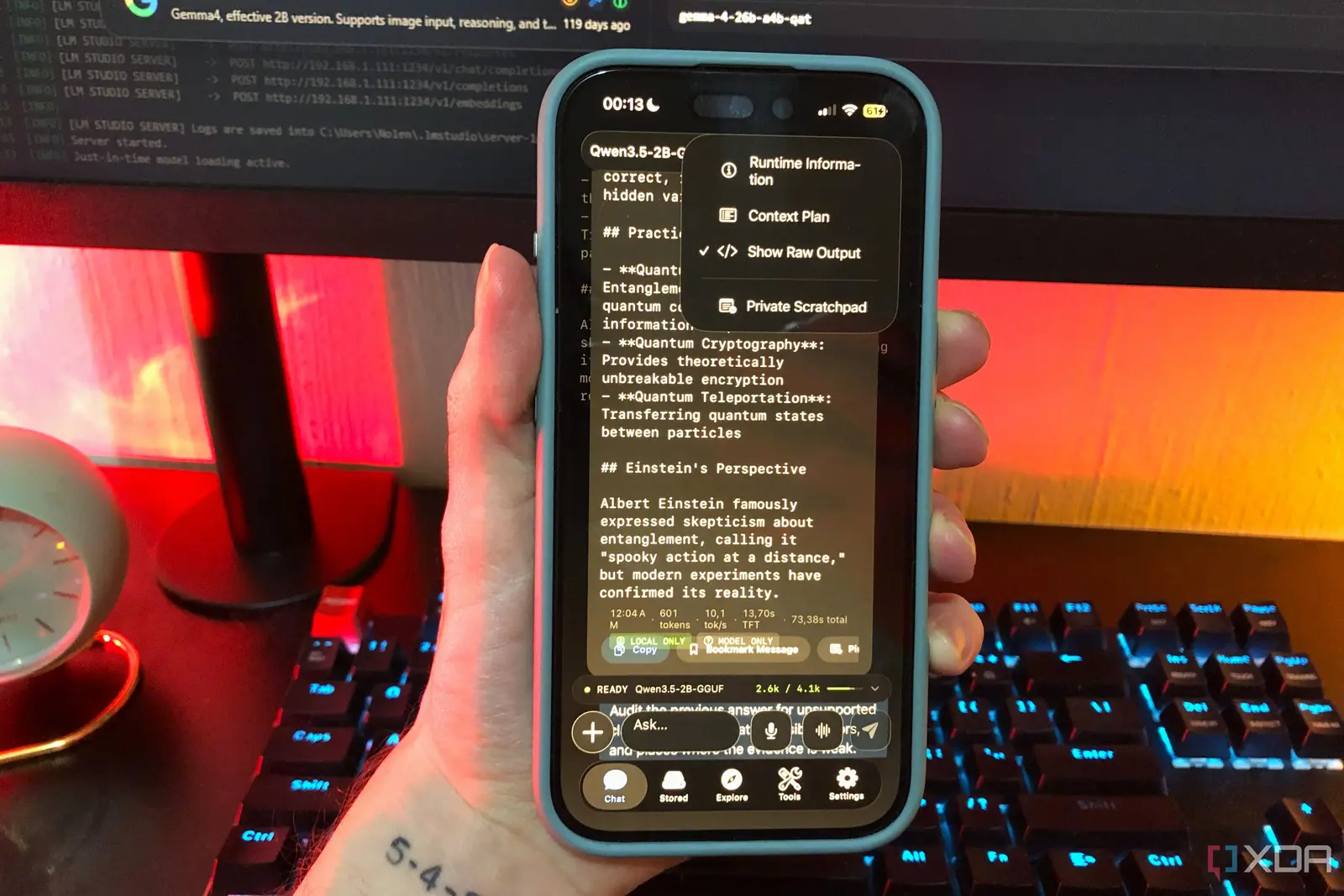 Running a Local AI Model on a Phone Handles Most Chat Prompts
 Google Photos Could Soon Offer a Fresh Start with Ask Photos Feature
The model, named LittleLM-3.8B, was trained on a curated text dataset using techniques inspired by nanoGPT but scaled significantly. Vergnes used a single consumer-grade GPU and optimized training loops to minimize costs, tracking efficiency through the CORE benchmark, which measures performance per dollar. He emphasized that the goal was not to compete with state-of-the-art models but to explore the thresholds of what individuals can achieve with careful engineering and persistence. The training process took several weeks, with careful attention to learning rate schedules and batch sizing to maintain stability.
What Can Be Learned When You Build From Scratch
By sharing his methodology openly, Vergnes hopes to lower barriers for independent researchers and hobbyists interested in understanding large language models at a fundamental level. He documented every step, from data preparation to evaluation, to enable replication. The project challenges the assumption that cutting-edge AI requires institutional backing, showing that insight and optimization can compensate for limited compute. This approach could inspire more grassroots experimentation in AI, particularly in regions or institutions with restricted access to supercomputing resources.
Vergnes noted that building the model from the ground up revealed nuances often hidden when using high-level frameworks, such as the sensitivity of training dynamics to initialization and the importance of debugging gradients early. He found that understanding emerged gradually, not suddenly, as the model began to generate coherent phrases after seeing sufficient data. This hands-on experience provided insights that are difficult to gain through fine-tuning existing models alone. He encourages others to attempt similar projects to develop deeper intuition about how language models work internally.
What is the CORE score and why does it matter? CORE measures model performance relative to training cost, allowing fair comparison across different budgets. A score of 0.384 indicates strong efficiency for the resources used.
Frequently Asked Questions
Did Hugo use any existing model weights as a starting point? No, the model was trained entirely from random initialization, with no pretrained weights or transfer learning involved.
Can others replicate this results with similar hardware? Yes, Vergnes has shared all code and training details publicly, enabling replication on comparable consumer-grade hardware.