Local AI vs Cloud Services: A Practical Test
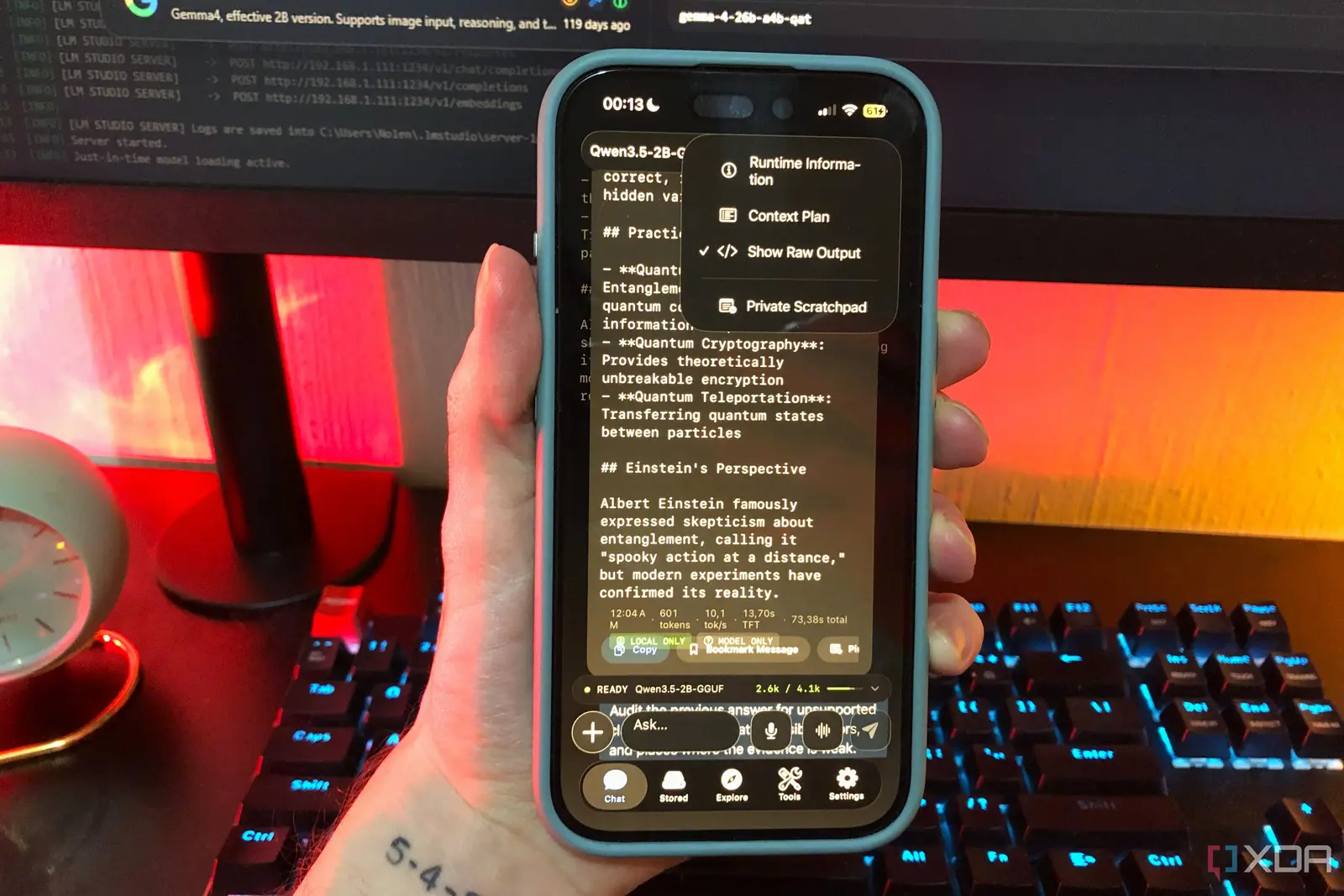
The writer, who has edited a creative technology section for three years, set up a lightweight LLM on his device. He ran the model without any internet connection, relying solely on the phone’s CPU and GPU. Over the course of a month, he logged every prompt and its outcome, comparing local responses to those from cloud‑based services.
Breaking news
 Trump Orders Federal Agencies to Adopt „Super Intelligence” Terminology
 The Silicon Valley Accountability Gap
 Google Photos Could Soon Offer a Fresh Start with Ask Photos Feature
 Bill Gates Warns AI Risks Are Already Here, Not Just in the Future
The local model was a compact transformer trimmed to fit on a mid‑range phone. It used a pre‑trained checkpoint that had been fine‑tuned on general knowledge and conversational data. The author sent typical prompts—fact‑checking, casual conversation, and simple coding questions—to both the local model and the cloud APIs.
Results showed that 90% of the prompts received satisfactory answers from the phone. The remaining 10% required the cloud for more complex The author noted that latency was negligible for local responses, with most replies arriving in under a second. When the cloud was called, the delay increased to several seconds, depending on network speed.
Can Local Models Replace Cloud AI? What Are the Limits?
The experiment also highlighted privacy benefits. All data stayed on the device; no user text was transmitted to external servers. The author emphasized that this approach could appeal to users concerned about data leakage or wanting to avoid subscription costs.
The writer questioned whether local models can fully replace cloud services. He identified several constraints. First, the phone’s storage limits the size of the model; larger, more capable systems still require cloud resources. Second, the local model’s knowledge is static, frozen at the time of its last training update. Third, power consumption rises when the phone runs the model continuously, potentially draining the battery faster.
Despite these drawbacks, the author believes local AI can serve as a first line of assistance. For many everyday tasks, a phone‑based model is sufficient. For more demanding queries—such as advanced scientific calculations or the latest news—the cloud remains necessary.
Frequently Asked Questions
The broader implication is a shift toward hybrid workflows. Users can start with a local model for speed and privacy, then fall back to cloud services when deeper expertise is needed. This approach could reduce data traffic, lower costs, and improve user control over personal information.
What type of model did the author use? He used a compact transformer model, trimmed to fit on a standard smartphone, pre‑trained on general knowledge and fine‑tuned for conversation.
What were the main limitations of the local model? It cannot access real‑time data, has a limited knowledge cutoff, and is constrained by the phone’s storage and processing power.