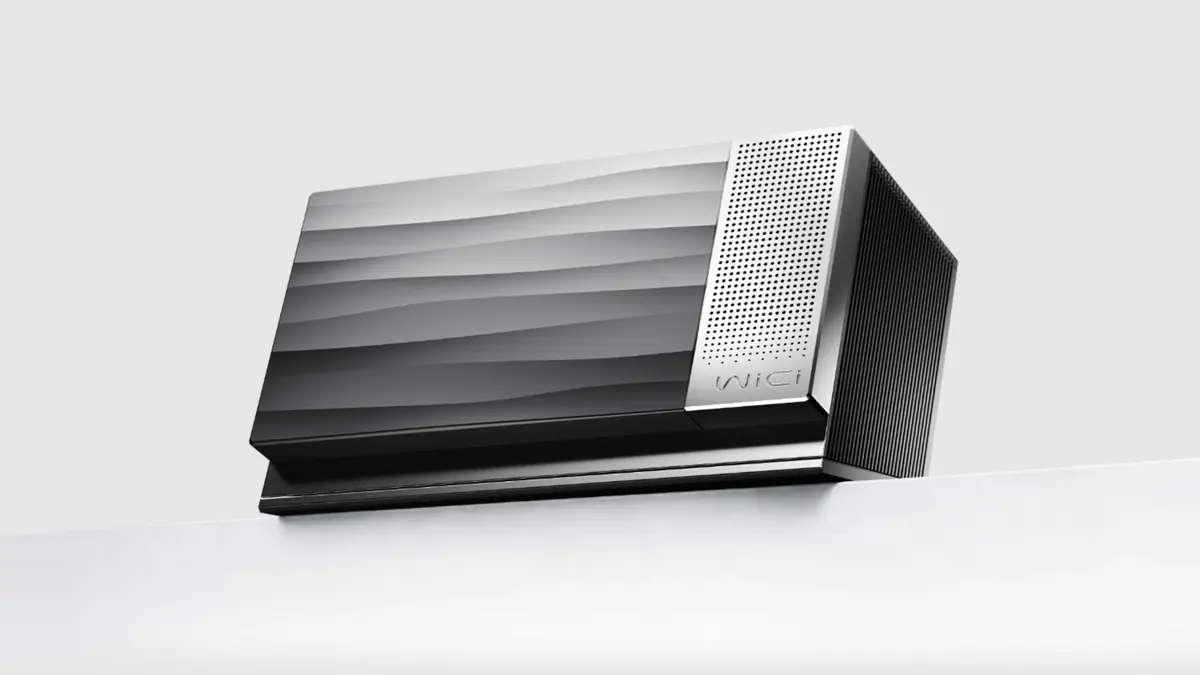
How WiCi One Reimagines External Graphics
WiCi is preparing to launch a wireless external graphics solution that integrates a GeForce RTX 5060 Ti with 16GB of GDDR7 memory and a complete computing system, all connected through Wi-Fi 7 technology. Announced in early October 2026, the product, named WiCi One, functions as a local server that delivers GPU performance wirelessly to compatible devices, eliminating the need for traditional wired eGPU enclosures. The company positions it as a seamless alternative for users seeking high-performance graphics without physical cables.
Breaking news
 Town AI Secures $108 Million Series B, Valued at $1 Billion After $55 M Pre‑Series
 Apple Prepares for Major Product Launch Event on October 28
 Apple Releases Release Candidates for watchOS, tvOS and visionOS 27.2
 Apple Limits iPhone Duo and iPhone 18 Pro Max to Reservation-Only Sales in Japan and South Korea
Unlike conventional eGPU setups that rely on Thunderbolt or USB-C connections, WiCi One embeds the RTX 5060 Ti within a standalone unit that includes its own processor, memory, and storage, effectively creating a mini-PC. This internal system handles graphics rendering and transmits the output over Wi-Fi 7 to laptops, desktops, or even tablets that support the standard. The approach reduces latency typically associated with wireless video transmission by leveraging localized processing. WiCi emphasizes that the solution is not merely a graphics adapter but a self-contained computing node designed to offload GPU-intensive tasks while maintaining compatibility with existing software ecosystems.
What Challenges Does Wireless GPU Transmission Present?
Delivering high-bandwidth graphics data wirelessly introduces hurdles related to bandwidth consistency, interference, and power efficiency, especially for demanding applications like 4K gaming or professional rendering. WiCi addresses these by optimizing the Wi-Fi 7 link for low-latency, high-throughput communication and incorporating adaptive quality scaling based on network conditions. The company notes that performance will vary depending on the user's wireless environment but asserts that ideal conditions can deliver near-wired eGPU results. Early testing suggests the system maintains stable frame rates in popular titles when operating within close range of the transmitter.
How does WiCi One differ from a traditional eGPU? It combines the GPU with a full computing system inside a single unit, using Wi-Fi 7 instead of a physical cable to send video output to a host device, making it a wireless local server rather than just an external graphics box.
Frequently Asked Questions
What are the requirements to use WiCi One? Users need a device with Wi-Fi 7 support and compatible drivers; the host system handles input and display while the WiCi One unit processes graphics remotely over the wireless link.
Will performance match that of a wired eGPU? Under optimal wireless conditions with minimal interference, WiCi claims performance can approach wired eGPU levels, though real-world results depend on distance, obstacles, and network congestion.