
How Will Enterprises Benefit?
Baseten, a cloud‑based model hosting platform, announced a partnership with OpenAI on September 29, 2026. The deal allows OpenAI’s enterprise customers to apply their existing commitments to host open‑source models on Baseten’s infrastructure. The collaboration targets businesses that already use OpenAI’s enterprise suite, offering them a seamless way to deploy additional models without renegotiating new contracts.
Breaking news
 Designing AI for the Real World: Overcoming Physical System Challenges
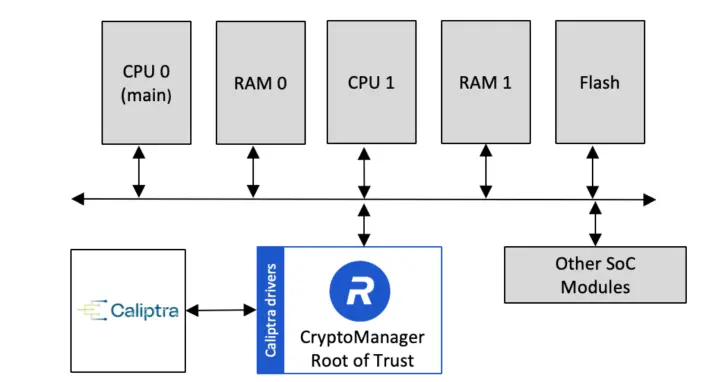 Caliptra Foundation advances open-source Root of Trust for enterprise security
 The Witcher 3 Remastered launches on Linux with immediate success
 Apple Pay Launches in India with Axis Bank Partnership
The partnership builds on Baseten’s reputation for low‑latency, scalable model serving. OpenAI’s enterprise customers typically sign long‑term agreements that cover compute, storage, and support for proprietary models. With this new arrangement, those same agreements extend to open models hosted by Baseten, simplifying billing and compliance. The arrangement also gives enterprises access to Baseten’s advanced monitoring and versioning tools, which are not available on OpenAI’s native platform.
Baseten’s platform supports a wide array of open‑source frameworks, including PyTorch, TensorFlow, and Hugging Face. By leveraging existing OpenAI commitments, enterprises can now run these models on Baseten without incurring additional costs. The integration is designed to be plug‑and‑play. Customers log into their OpenAI dashboard, select Baseten as a deployment target, and the system automatically maps their usage to the pre‑existing contract. This eliminates the need for separate licensing negotiations.
What Does This Mean for the AI Landscape?
The move is timely, as many companies are shifting toward hybrid AI strategies. They want to combine proprietary models with open‑source solutions to reduce vendor lock‑in and lower costs. Baseten’s partnership gives them a straightforward path to do so. According to Baseten’s CEO, „We’re thrilled to extend our services to OpenAI’s enterprise community. This partnership empowers organizations to innovate faster while keeping cost and compliance under control.”
Enterprise users will see several immediate advantages. First, they gain access to a broader model ecosystem. Second, they avoid the administrative burden of managing multiple contracts. Third, they benefit from Baseten’s robust security and compliance certifications, which align with OpenAI’s enterprise standards. The integration also supports automated scaling, allowing businesses to handle traffic spikes without manual intervention.
Frequently Asked Questions
For OpenAI, the partnership strengthens its ecosystem by encouraging the use of open‑source models alongside proprietary offerings. It positions OpenAI as a flexible partner rather than a siloed vendor. The collaboration also opens new revenue streams for Baseten, as it taps into a large, already‑contracted customer base.
The partnership signals a broader trend toward modular AI infrastructure. Companies are increasingly looking for ways to mix and match models from different vendors. By allowing OpenAI customers to deploy open models on Baseten, the industry moves closer to a unified AI ecosystem. This could accelerate the adoption of AI across sectors, from finance to healthcare, where regulatory compliance and cost control are critical.
In the long term, the collaboration may prompt other cloud providers to adopt similar arrangements. It also encourages open‑source communities to build more production‑ready models, knowing that they can be deployed at scale without complex licensing hurdles.