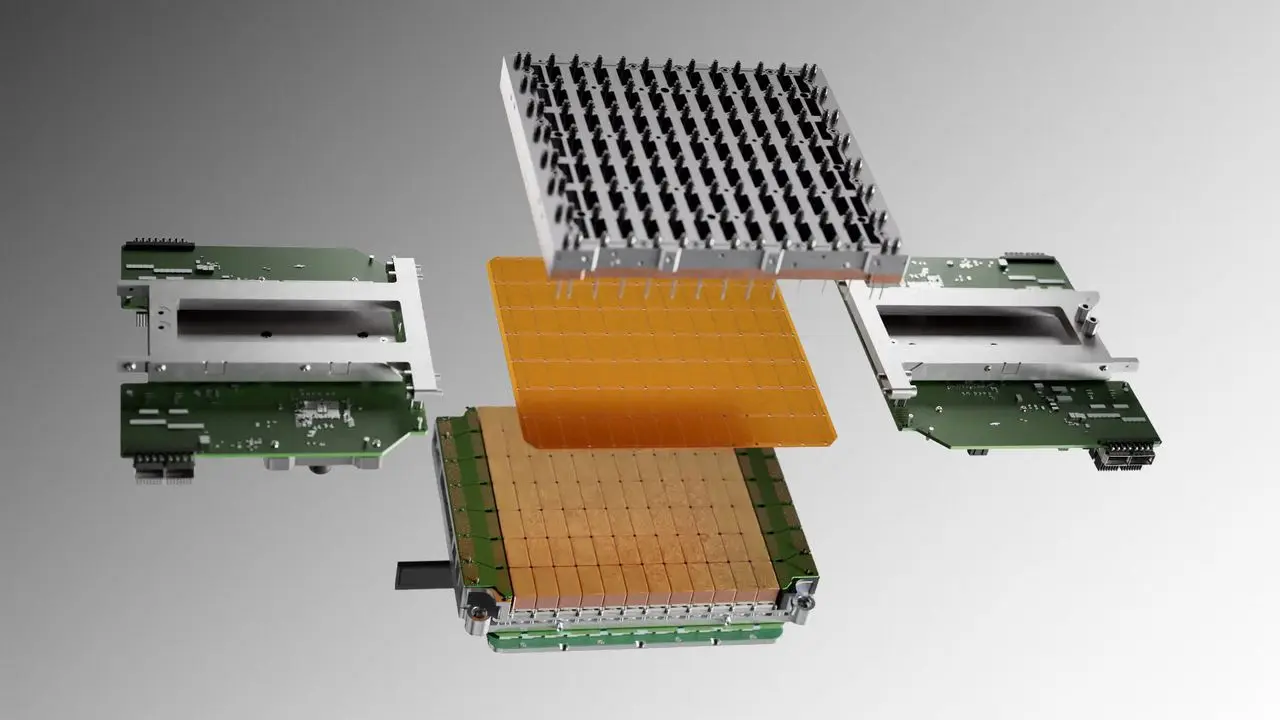
Nexus Architecture Redefines Rack-Scale Efficiency
At the Hot Chips 2026 conference, Cerebras Systems disclosed its strategic roadmap for the next two generations of wafer-scale accelerators. The company detailed how its new Nexus system architecture will significantly enhance performance metrics. This announcement highlights a major shift in how massive AI models are processed and served globally.
Breaking news
 Town AI Secures $108 Million Series B, Valued at $1 Billion After $55 M Pre‑Series
 Apple Prepares for Major Product Launch Event on October 28
 Apple Releases Release Candidates for watchOS, tvOS and visionOS 27.2
 Apple Limits iPhone Duo and iPhone 18 Pro Max to Reservation-Only Sales in Japan and South Korea
The firm aims to triple rack-scale performance through this architectural evolution. By leveraging its proprietary wafer-scale integration, Cerebras continues to differentiate itself in the competitive semiconductor market. The focus remains on delivering extreme speed for complex computational tasks.
The core innovation lies in the Nexus system architecture. This design allows for tighter integration between processing units within the wafer-scale engine. Previous iterations faced bottlenecks when scaling across multiple racks. The new approach minimizes data movement latency between chips. This results in a more cohesive computing environment.
How Will This Impact Low-Latency Inference?
Cerebras emphasizes that this upgrade is not just about raw power. It is about efficiency and sustained throughput. The architecture supports higher density of SRAM memory directly on the wafer. This reduces reliance on slower external memory systems. Consequently, inference times drop dramatically for large language models. The system can handle concurrent user requests without degradation.
Low-latency inference has become a critical requirement for modern AI applications. Users expect near-instant responses from chatbots and search tools. Cerebras technology powers specific tiers of major AI services. For instance, it enables ultrafast response times for advanced chat interfaces. The new roadmap ensures these capabilities will expand further.
The company noted that current deployments already support high-throughput scenarios. The upcoming generations will push these limits even higher. Developers can build applications that require real-time decision making. This includes autonomous systems and complex simulation environments. The hardware provides a stable foundation for these demanding workloads.
Frequently Asked Questions
What is the primary advantage of the Nexus architecture? The Nexus architecture triples rack-scale performance by optimizing data flow. It reduces latency between processing units within the wafer-scale engine. This leads to faster overall system responsiveness.
Which AI services currently use Cerebras technology? Major platforms utilize Cerebras engines for their fastest inference tiers. These include specific ultrafast modes for popular chatbot services. The technology handles high-volume, low-latency requests effectively.
When will the next generation be available? Cerebras outlined the roadmap for the next two generations at the conference. Specific release dates were part of the broader strategic reveal. The company plans to roll out these upgrades in phases.