How Dual-ISA Integration Improves Workload Flexibility
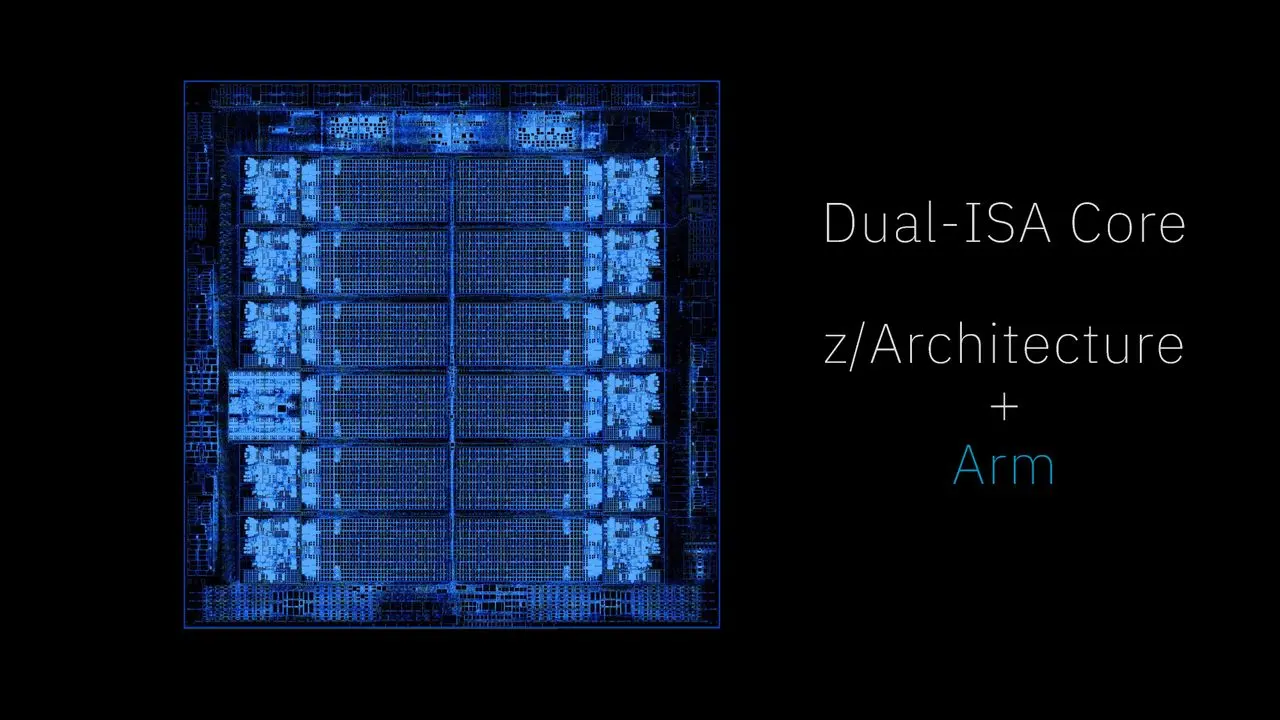
IBM introduced its first dual-instruction-set architecture core at the Hot Chips 2026 conference, enabling native execution of both ARM and z/Architecture instructions within a single processor core. The innovation, developed through internal research, allows all cores on the chip to operate at a uniform 5 GHz frequency. This marks a significant shift in mainframe design, aiming to unify workloads across traditional enterprise applications and modern cloud-native environments. The technology was demonstrated in a prototype system during the event, signaling IBM’s intent to broaden software compatibility without sacrificing performance.
Breaking news
 Canonical’s Web Presence Hit by Second DDoS Assault This Year
 Loops AI Secures $3.5 Million to Power a New AI Operating System for E‑Commerce
 Winverse AI Secures Tens of Millions in Seed Funding from DeepSeek and Long‑Z
 Google Adds Pixel 9 Series to Certified Refurbished Store
The dual-ISA core eliminates the need for separate processing units or emulation layers when running ARM-based Linux containers alongside legacy z/OS workloads. By integrating both instruction sets at the hardware level, IBM reduces latency and power overhead associated with software translation. The core supports seamless context switching between ISA modes, allowing applications to migrate between environments without recompilation. IBM engineers emphasized that the design maintains backward compatibility with existing z/Architecture software while opening doors to ARM-optimized AI and analytics tools. The 5 GHz clock speed applies uniformly across all cores, ensuring consistent performance regardless of the active instruction set.
What Challenges Remain in Software Adoption?
The new core enables dynamic workload placement, where administrators can assign tasks to the most suitable ISA without hardware constraints. For example, real-time transaction processing can remain on z/Architecture for reliability, while machine learning inference runs on ARM for efficiency. IBM noted that this flexibility reduces the need for data movement between systems, cutting latency in hybrid cloud scenarios. The architecture also simplifies virtualization, as hypervisors no longer need to manage ISA-specific scheduling. Early benchmarks showed up to 30% improvement in mixed-workload throughput compared to prior-generation systems using separate cores for each ISA.
Despite hardware readiness, widespread adoption depends on software ecosystems catching up to support dual-ISA execution natively. IBM is working with Linux distributors and independent software vendors to certify containers and applications for seamless operation across both instruction sets. Compiler toolchains are being updated to generate binaries that can run in either mode without modification. The company acknowledged that initial deployment will likely focus on controlled environments like internal cloud platforms before broader rollout. Training and documentation efforts are underway to help mainframe teams understand the new programming model.
Can existing z/OS applications run on the new core without changes? Yes, all current z/Architecture software continues to operate unchanged, as the core maintains full backward compatibility while adding ARM support.
Frequently Asked Questions
Will the dual-ISA core increase power consumption compared to single-ISA designs? IBM states that the unified design is more power-efficient than running separate cores for each ISA, thanks to shared caches and reduced data duplication.
When will systems featuring this core be available to customers? IBM has not announced a commercial release date, noting that the Hot Chips 2026 presentation featured a prototype for research and collaboration purposes.