Encryption Without Exposure: How Model Vault Works
Cohere, a leading provider of generative AI tools, announced on September 16, 2026 that its new Model Vault feature will encrypt all inference data, preventing even the company from accessing customer inputs. The update targets large enterprises that use Cohere’s language models for internal applications, offering a higher level of data confidentiality amid rising regulatory scrutiny.
Breaking news
 Trump Orders Federal Agencies to Adopt „Super Intelligence” Terminology
 The Silicon Valley Accountability Gap
 Running a Local AI Model on a Phone Handles Most Chat Prompts
 Google Photos Could Soon Offer a Fresh Start with Ask Photos Feature
The Model Vault builds on Cohere’s existing privacy framework by adding end‑to‑end encryption to the inference pipeline. When a user sends a prompt, the data is encrypted on the client side, transmitted to Cohere’s servers, and then decrypted only within a secure enclave. After the model generates a response, the output is re‑encrypted before leaving the enclave, ensuring that no unencrypted data is stored or visible to Cohere’s staff. The company claims the feature is compatible with all existing APIs and requires no changes to client code.
Will This Change the Competitive Landscape?
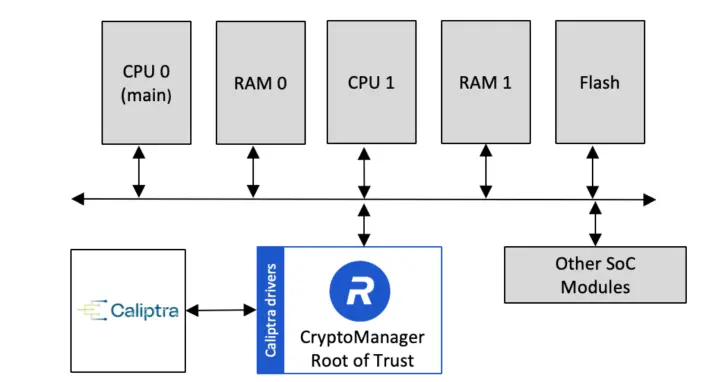
Cohere explains that the vault uses a combination of hardware‑based Trusted Execution Environments (TEEs) and cryptographic key management. Each customer receives a unique key pair that is never shared with Cohere. The keys are stored in a secure key vault, and only the customer’s on‑premises or cloud environment can decrypt the data. Cohere’s servers act solely as processors, executing the model inside the TEE and returning encrypted results. This approach mirrors the security model used by major cloud providers for sensitive workloads, but is tailored specifically for generative AI inference.
Industry analysts note that the move addresses a key pain point for regulated sectors such as finance, healthcare, and defense. „Generative AI is powerful, but the risk of data leakage is a real barrier to adoption,” says Dr. Maya Patel, a cybersecurity researcher at the University of Washington. „By ensuring that the service provider can’t see the content, Cohere removes a significant compliance hurdle.”
What Does This Mean for the Future of AI Security?
The introduction of Model Vault could shift the balance among AI vendors. Companies like OpenAI and Anthropic have announced similar privacy enhancements, but Cohere’s solution is unique in its promise of zero‑knowledge inference. „We’re not just encrypting data at rest; we’re encrypting it in motion and in use,” says Cohere’s chief technology officer. „That level of protection is rare in the market.”
Customers who previously opted for on‑premises deployment to keep data local may now consider cloud‑based services without compromising privacy. Early adopters include a Fortune 500 financial institution that reported a 40% reduction in data‑breach risk after implementing the vault. However, the feature may increase inference latency by a few milliseconds, a trade‑off that most enterprises deem acceptable for the added security.
Frequently Asked Questions
Cohere’s Model Vault signals a broader industry trend toward „privacy‑by‑design” AI solutions. As regulators tighten rules around data handling, vendors that can prove end‑to‑end confidentiality will gain a competitive edge. The feature also sets a new standard for how AI providers can collaborate with customers on sensitive projects, potentially accelerating adoption in sectors that have been hesitant due to security concerns.
In the coming months, Cohere plans to extend the vault to support multi‑tenant environments and to integrate with popular identity‑and‑access‑management systems. If successful, the Model Vault could become a baseline requirement for any enterprise looking to leverage generative AI without exposing proprietary data.