Customizing Permissions for Every Household Member
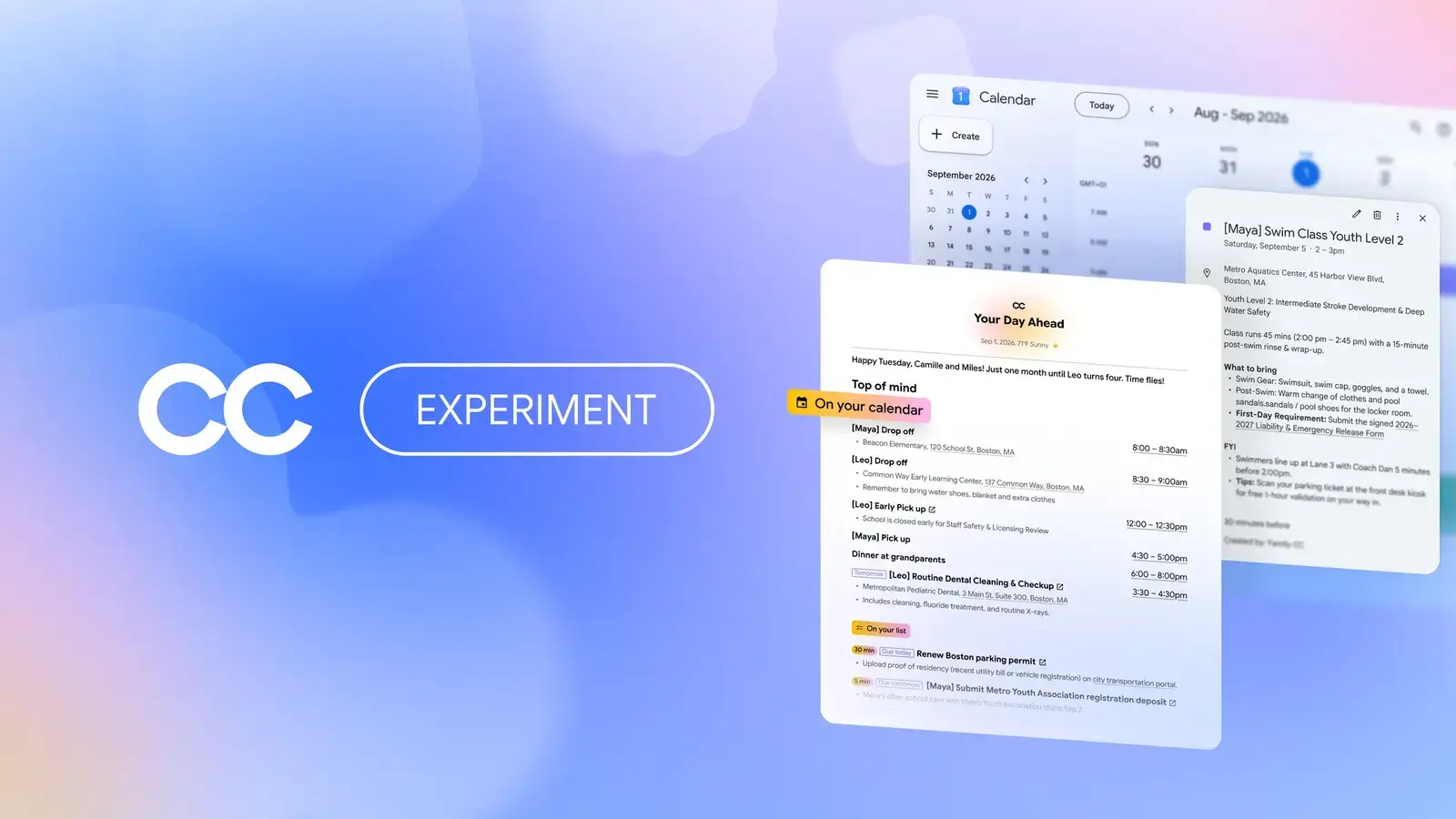
Google has officially expanded access to its experimental artificial intelligence agent, known as CC, allowing households to share a single instance among up to six family members. The update was announced on September 17, 2026, marking a significant shift in how personal AI assistants are deployed within domestic settings. This move transforms CC from an individual tool into a collaborative household resource.
Breaking news
 Trump Orders Federal Agencies to Adopt „Super Intelligence” Terminology
 The Silicon Valley Accountability Gap
 Running a Local AI Model on a Phone Handles Most Chat Prompts
 Google Photos Could Soon Offer a Fresh Start with Ask Photos Feature
The primary feature of this expansion is the ability for multiple users to interact with the same agent simultaneously. Instead of each family member maintaining a separate, isolated profile, they now connect through a unified system. This approach aims to reduce redundancy while enhancing coordination. The company emphasizes that this shared model allows for better contextual understanding across different user needs within the same home environment.
A critical component of the new family tier is granular control over permissions. Each individual user can define specific boundaries for what the AI agent is allowed to do or know. This ensures that privacy preferences remain distinct even when sharing a central platform. For example, one family member might grant the agent access to their calendar and emails, while another restricts it to general web browsing only. These individual settings operate independently, preventing one person’s broad access from automatically applying to others. The system processes these constraints in real-time to maintain security and user comfort.
How Does Shared Access Affect Daily Productivity?
This design addresses common concerns about data privacy in shared digital spaces. By allowing personalized limits, Google enables families to balance convenience with protection. Users retain agency over their digital footprint without sacrificing the benefits of a shared assistant. The architecture supports complex permission structures that adapt to diverse household dynamics.
The introduction of a shared agent is expected to streamline routine tasks for busy households. Family members can delegate similar requests to the same entity, reducing the need for repetitive setup. For instance, if one parent asks the agent to plan a weekend trip, other members can view or modify those plans instantly. This fosters collaboration and reduces communication gaps. The agent acts as a central hub for household logistics, from scheduling appointments to managing shopping lists.
Frequently Asked Questions
However, the experimental nature of the release suggests that some features may still be evolving. Users should expect ongoing updates as Google refines the shared experience based on initial feedback. The focus remains on making the interaction feel natural and intuitive for all participants.
How many people can share one CC agent? Up to six family members can share a single instance of the CC agent. This limit ensures the system remains responsive and manageable for typical household sizes.
Can family members have different privacy settings? Yes, each member selects their own permissions for the agent. This means one user can allow broader access while another keeps restrictions tight, all within the same shared environment.