Moving Past Traditional Hardware Design Codes
Modern technology relies heavily on advanced microchips, which have improved dramatically over recent decades thanks to Moore's Law. These incredible efficiency gains now allow engineers to train massive artificial intelligence systems that reshape industries globally.
Breaking news
 Google Unveils Gemini 4 Argon as Next-Generation AI Model
 Google AI Revenue Pilot Leaves Publishers Confused Over Payouts
 London Startup Launches With Millions to Track Orbital Debris
 Sofia-Based LAUNCHub Ventures Raises €65 Million for Third Investment Fund
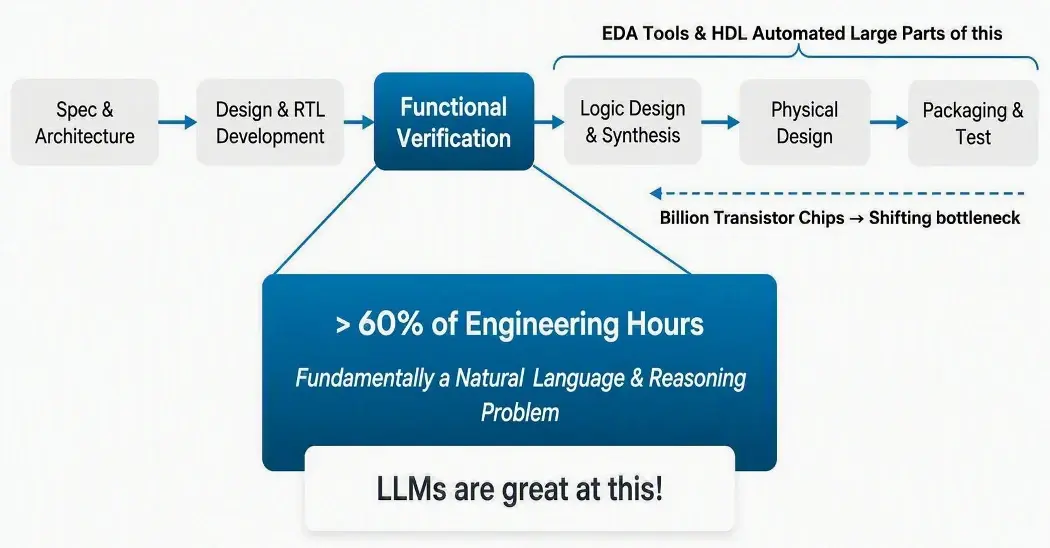
For years, designing semiconductors meant writing Register-Transfer Level code, a painstaking process requiring immense manual effort. Artificial intelligence models now offer a revolutionary way forward by translating high-level human ideas directly into working silicon architecture.
Writing traditional hardware description languages slows down innovation cycles significantly. Engineers spend countless hours defining low-level logic gates instead of focusing on overarching system functionality and creative problem-solving.
Can Natural Language Finally Simplify Complex Silicon Architecture?
Large language models bridge this gap by interpreting natural language prompts and generating optimized functional code. This shift allows designers to express their exact intentions intuitively without getting bogged down in syntax.
By leveraging advanced machine learning capabilities, teams can iterate through architectural variations in a fraction of the usual time. This automation reduces human error and accelerates the creation of specialized processors.
Frequently Asked Questions
The integration of artificial intelligence into semiconductor workflows represents a natural evolution for the hardware industry. As design tools become smarter, the barrier to creating custom silicon drops rapidly for modern enterprises.
What traditional method do engineers use for chips? Engineers traditionally rely on Register-Transfer Level code to define semiconductor logic manually.
How does artificial intelligence improve this process? It translates intuitive human intent directly into functional architecture, bypassing tedious coding steps.