Modeling Warpage with Deep Learning Approaches
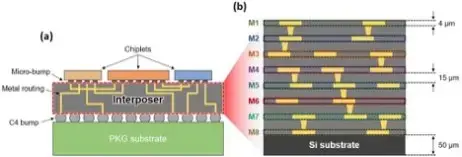
Semiconductor manufacturers are adopting 2.5D and 3D packaging architectures to meet the rising bandwidth demands of artificial intelligence workloads, increasing interconnect density in advanced chip designs. While 2.5D interposers offer a passive alternative that sidesteps certain reliability issues found in 3D packages, they remain susceptible to thermomechanical failure due to material mismatches and thermal cycling. These challenges are particularly pronounced in high-performance computing applications where heat generation and electrical current density continue to rise.
Breaking news
 Town AI Secures $108 Million Series B, Valued at $1 Billion After $55 M Pre‑Series
 Apple Prepares for Major Product Launch Event on October 28
 Apple Releases Release Candidates for watchOS, tvOS and visionOS 27.2
 Apple Limits iPhone Duo and iPhone 18 Pro Max to Reservation-Only Sales in Japan and South Korea
Recent research indicates that deep learning models could offer a promising pathway for simulating and predicting interposer warpage caused by thermal expansion. By training on extensive datasets of material behavior under thermal stress, these models may improve the accuracy of failure predictions during the design phase. This approach allows engineers to evaluate multiple material combinations and geometric configurations virtually, reducing reliance on costly physical prototypes. Early results suggest that neural networks can capture complex, nonlinear relationships between temperature gradients, coefficient of thermal expansion mismatches, and resulting deformation patterns more effectively than traditional analytical methods.
How Can Electromigration Risks Be Mitigated in High-Density Interconnects?
Electromigration, the gradual movement of metal atoms due to high current density, poses another critical threat to interposer reliability, especially as interconnect pitches shrink to support AI accelerators. Addressing this requires careful selection of barrier materials, optimization of current crowding effects, and implementation of redundant via structures. Designers are also exploring the use of alternative conductive materials such as cobalt or ruthenium to enhance resistance to atomic migration. Simulation tools that integrate both thermal and electrical stress factors are becoming essential for validating long-term stability under real-world operating conditions.
What makes 2.5D interposers vulnerable to thermomechanical failure despite being passive components? Although 2.5D interposers do not contain active transistors, they still experience stress from differences in thermal expansion between the interposer material and attached dies or substrates, leading to warpage, cracking, or delamination over time.
Frequently Asked Questions
Why is electromigration a growing concern in advanced packaging? As transistor density increases and power delivery requirements rise, current density in interconnects grows, accelerating the movement of metal atoms and potentially causing open circuits or increased resistance in critical signal paths.
Can deep learning models replace traditional simulation tools for interposer design? Not entirely, but they can significantly accelerate and enhance traditional methods by identifying complex patterns in large datasets, enabling faster exploration of design spaces and more accurate prediction of failure mechanisms under combined thermal and electrical stress.