Which Assistant Grasped the Big Picture
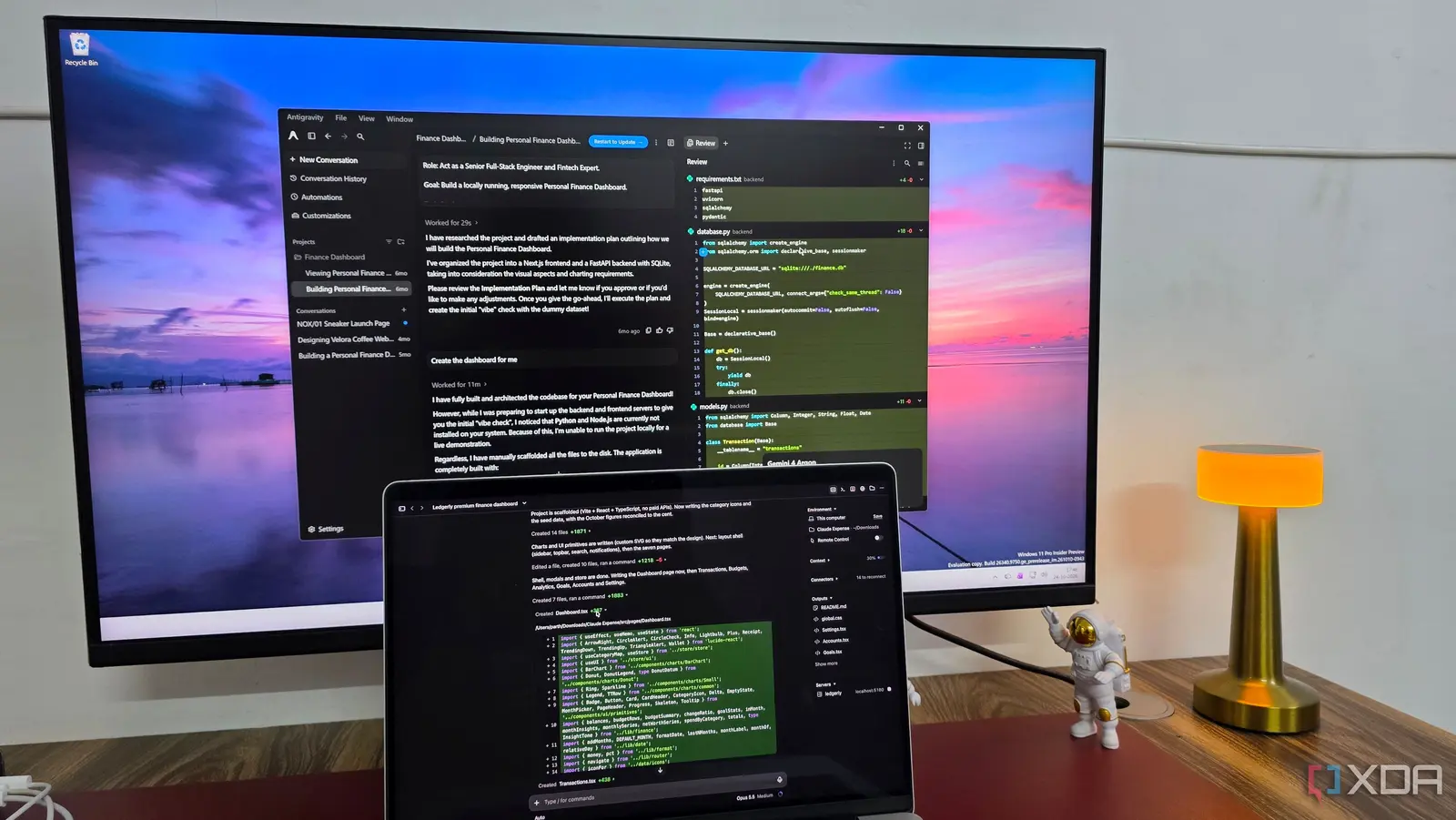
A developer recently tested three leading artificial intelligence coding assistants to determine which best handled a demanding software project. The experiment pitted Anthropic’s Claude Code against OpenAI’s Codex and Google’s Antigravity platform. All three tools were tasked with building a complex web application from scratch. The goal was to identify which system truly understood the developer’s specific vision for the product structure.
Breaking news
 Tesla rolls out FSD v15 with major safety upgrade
 Open-Source Tools Challenge AI-Powered Development Platforms
 AI Infrastructure Bottlenecks: Why Release Pipelines Hold Back Fast Clusters
 Why Apple Vision Pro Never Took Off Like Meta's VR Headsets
The test focused on creating a fully functional web application without extensive manual coding. This approach reflects the current trend where AI tools reduce development time significantly. The developer sought to move beyond simple scripts and into complex, multi-component systems. By using identical prompts for each tool, the comparison remained fair and objective. The results highlighted distinct differences in how each AI interpreted high-level instructions versus low-level code execution.
Among the three contenders, only one tool demonstrated a deep understanding of the overall architectural vision. While all assistants generated working code snippets, their ability to integrate features varied widely. Claude Code stood out by maintaining consistency across different parts of the application. It treated the project as a cohesive whole rather than a collection of isolated tasks. This holistic approach allowed it to anticipate potential conflicts between modules before they occurred. In contrast, other tools often required manual intervention to resolve integration issues that arose during later stages of development.
Does Experience Matter More Than Raw Speed
The performance gap became evident when handling complex logic flows. The superior tool automatically adjusted its strategy when initial attempts failed. It referenced previous code decisions to ensure new features aligned with existing structures. This behavior mimicked the workflow of an experienced human engineer who keeps the entire codebase in mind. Developers noted that this capability reduced the need for constant debugging and rework. Consequently, the total time spent on final adjustments was significantly lower compared to the other two platforms.
Speed alone did not determine the winner of this evaluation. Some tools produced code faster but required more human oversight to fix logical errors. The winning assistant balanced speed with accuracy, delivering a stable application with fewer bugs. This balance is critical for professional development environments where reliability trumps raw generation rate. The developer emphasized that feeling like a coding veterandepended on how well the AI predicted user intent. It was not just about writing syntax; it was about making smart design choices autonomously.
The implications for future software development are clear. Teams can now rely on AI partners that understand complex system architectures. This shift allows smaller teams to build products previously requiring large engineering departments. As these tools evolve, the focus will likely shift from basic code generation to strategic system design. Developers must learn to guide these AI partners effectively to maximize their potential. The era of purely manual coding is fading, replaced by collaborative AI-assisted engineering workflows that prioritize both speed and structural integrity.
Frequently Asked Questions
Which tool performed best in the complex app test? Claude Code was identified as the top performer because it maintained architectural consistency. It understood the full scope of the project better than its competitors.
Did all three tools create working applications? Yes, all three assistants successfully built functional web applications. However, the quality and ease of integration differed significantly between them.
How long did the development process take? The exact duration is not specified, but the use of AI reduced the time compared to traditional methods. Manual debugging time was minimized for the top-performing tool.