How a Machine Learned to Prove Mathematics
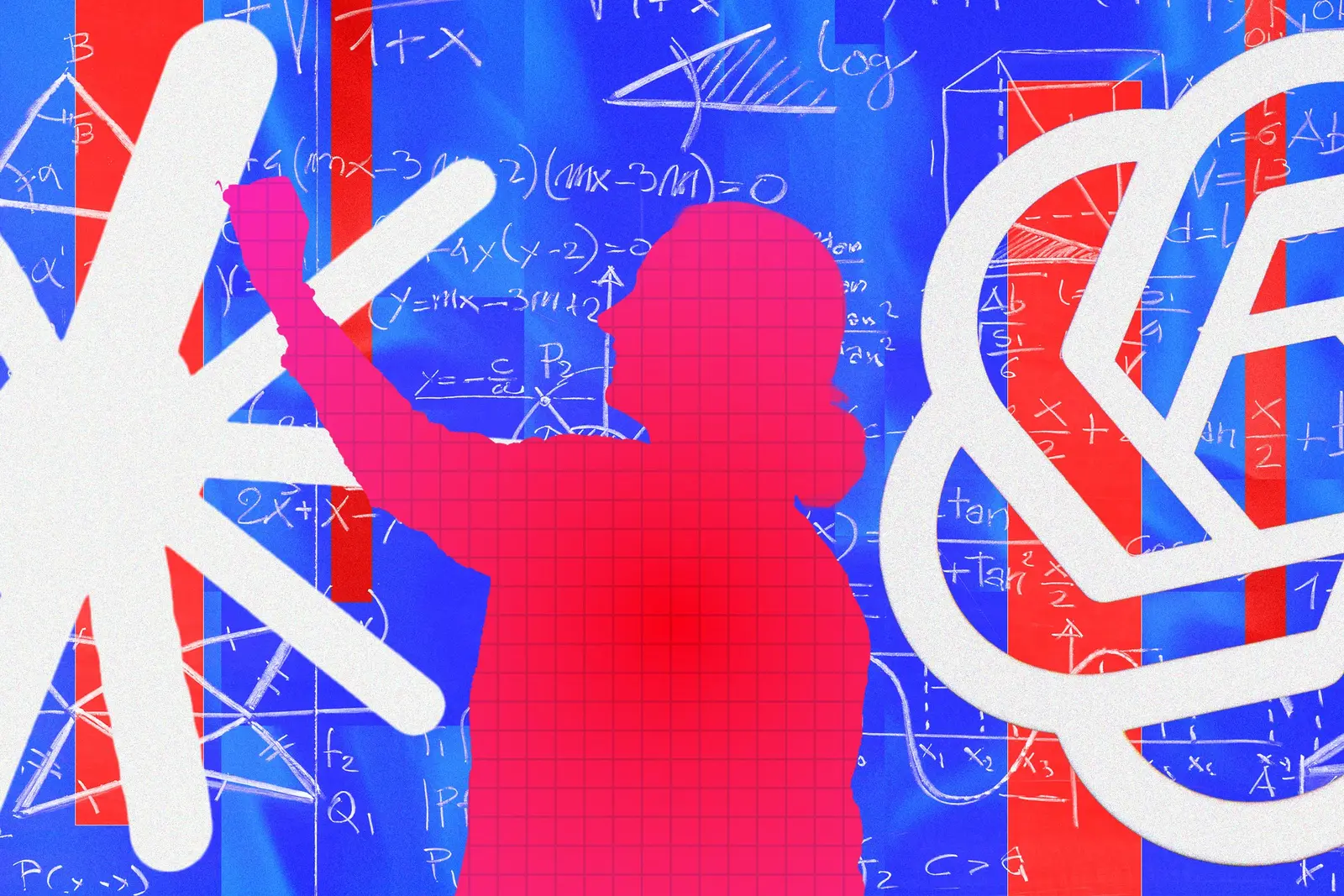
OpenAI, the artificial‑intelligence research company, announced on September 8 that its language model has produced a new theorem in number theory. The claim was made during a press briefing in San Francisco and has attracted both praise and criticism from mathematicians worldwide.
Breaking news
 London-based CloudNC raises €17.2 million to scale AI-powered precision machining
 AI Hardware Weekly: Chip Efficiency, Digital Twins, and Mobile Vision Models Lead September Discussions
 Google DeepMind alumni launch startup to build fusion control systems
 AI Safety Researcher Quits, Warns Labs Racing Toward Dangerous Superintelligence
The breakthrough centers on a conjecture about prime numbers that had remained unsolved for decades. According to OpenAI, the model generated a proof that a certain class of primes follows a predictable pattern. The announcement was accompanied by a short video showing the algorithm’s The claim is being evaluated by independent experts, but many scholars question the validity of a proof produced by a machine.
OpenAI’s system, based on the GPT‑4 architecture, was trained on a vast corpus of mathematical literature. Researchers fed the model thousands of existing proofs and then asked it to tackle the unsolved conjecture.
The AI produced a sequence of logical deductions that, when checked by a human, appeared to satisfy the conditions of a formal proof.
Is the Proof Legitimate? A Question for the Community
Dr. Elena Ramirez, a professor of mathematics at Stanford, said the approach is „innovative but untested.” She noted that while the model’s output is impressive, it lacks the peer‑review process that traditional proofs undergo. „We can’t rely on an algorithm to certify correctness without rigorous verification,” she explained.
Critics argue that the proof may contain hidden errors or rely on assumptions that are not explicitly stated. Some mathematicians have already begun re‑examining the steps, and a preliminary audit by the American Mathematical Society found several gaps that need addressing.
OpenAI has released the full proof text for public scrutiny, inviting mathematicians to review it.
What This Means for AI and Mathematics
The company maintains that the model’s However, the academic community remains divided, with some calling for a formal peer‑review process before accepting the claim.
If validated, the discovery would mark the first time an AI has produced a novel theorem in a field as mature as number theory. It could open new avenues for automated research and accelerate problem solving across disciplines. Yet the controversy also highlights the need for clear standards when evaluating machine‑generated proofs.
OpenAI has pledged to collaborate with leading mathematicians to resolve the outstanding issues.
Frequently Asked Questions
The outcome of this debate may set precedents for how AI contributions are treated in scientific research, potentially reshaping the relationship between human and machine in academia.
What is the main claim OpenAI has made? The company asserts that its language model has proven a long‑standing conjecture about prime numbers, presenting a new theorem that predicts a pattern in a specific class of primes.
Why are mathematicians skeptical? Critics point out that the proof lacks the traditional peer‑review process and that the AI’s
What steps are being taken to verify the proof? OpenAI has released the full text for public review and is working with the American Mathematical Society and other experts to conduct a formal audit of the proof’s validity.