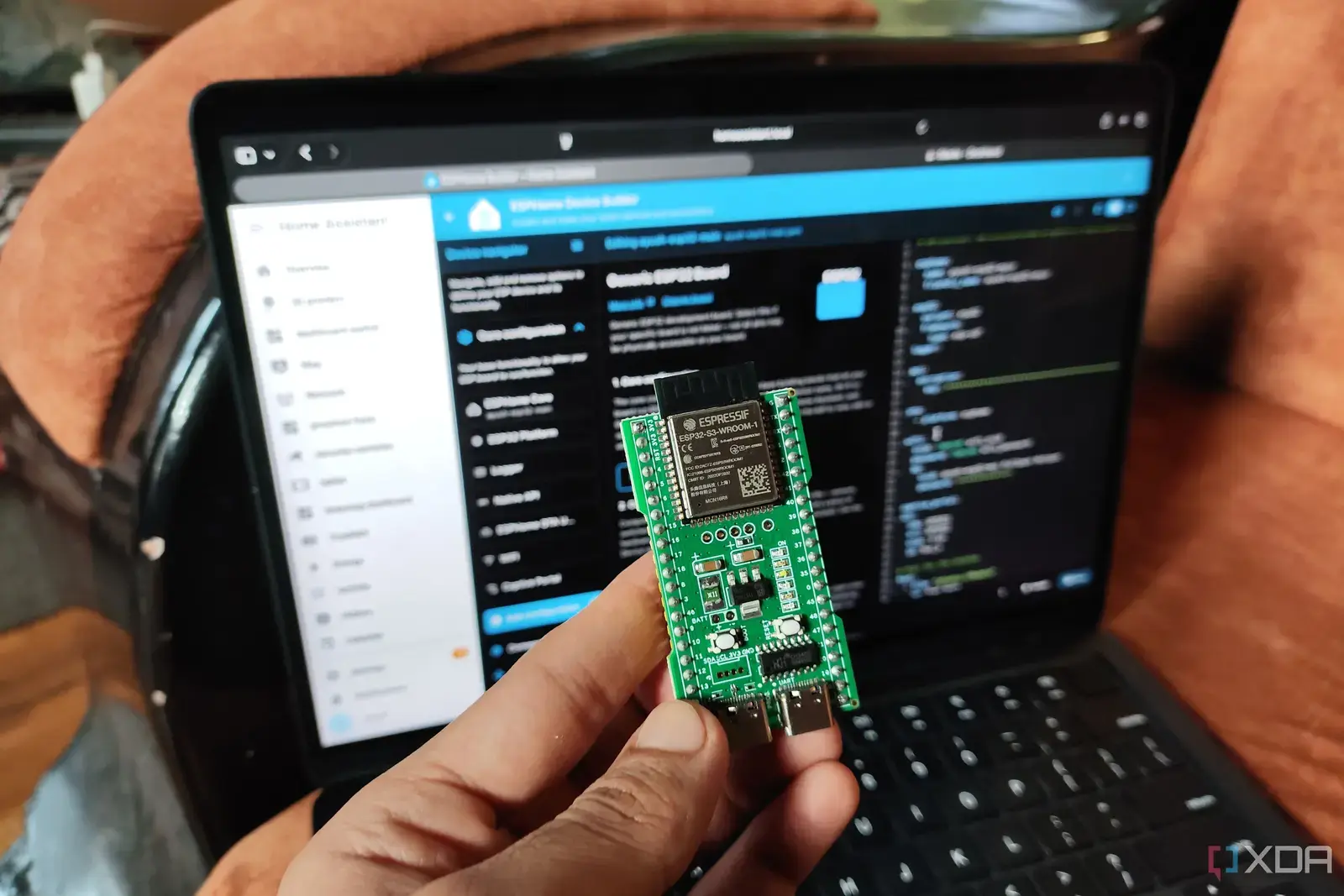
ESPHome’s YAML Advantage
Ayush Pande, September 18, 2026 – A hobbyist developer reports that moving to ESPHome has dramatically eased the creation of custom ESP32 devices for home automation. Ayush Pande, a PC hardware and gaming writer, recently transitioned from the traditional Arduino IDE to ESPHome to build several ESP32‑based smart sensors. The change has made his projects faster, more reliable, and easier to maintain, according to his own experience. Pande’s background in hardware and software design led him to experiment with ESP32 boards for home‑automation tasks. While the Arduino IDE offered a familiar environment, it required manual configuration of libraries and firmware updates. ESPHome, a YAML‑based framework, automates much of this work, allowing developers to focus on sensor logic rather than low‑level setup.
Breaking news
 Canonical’s Web Presence Hit by Second DDoS Assault This Year
 Loops AI Secures $3.5 Million to Power a New AI Operating System for E‑Commerce
 Winverse AI Secures Tens of Millions in Seed Funding from DeepSeek and Long‑Z
 Google Adds Pixel 9 Series to Certified Refurbished Store
Faster Deployment and Remote Management
ESPHome uses a simple YAML file to define device behavior, eliminating the need for complex code. Pande notes that writing a configuration file takes minutes, whereas coding in Arduino can take hours. The framework automatically generates C++ code, compiles it, and flashes the firmware. This streamlines debugging and reduces the chance of human error.
Reliability and Community Support
Because ESPHome integrates natively with Home Assistant, devices can be discovered and configured over the network immediately after flashing. Pande highlights that his sensors now update firmware over Wi‑Fi without manual intervention, cutting deployment time from days to hours. The ability to push updates remotely also means he can tweak sensor thresholds or add new features without physically accessing each device.
Pande points out that ESPHome’s community maintains a large library of pre‑built components for common sensors and actuators. This reduces the need to write custom drivers. When issues arise, the community forums provide quick solutions, which Pande says has improved the overall reliability of his projects.
Is ESPHome the Right Choice for All ESP32 Projects?
While ESPHome excels in rapid prototyping and integration with Home Assistant, it may not suit projects that require deep custom hardware control or real‑time performance. Developers needing low‑level access might still prefer the Arduino IDE or ESP-IDF for maximum flexibility.
Frequently Asked Questions
Final paragraph: By adopting ESPHome, Pande has transformed his workflow, turning a once tedious process into a streamlined, error‑free pipeline. The framework’s ease of use and tight integration with popular home‑automation platforms position it as a compelling choice for hobbyists and professionals alike, promising quicker time‑to‑market and easier maintenance for future ESP32 devices.