How the Breach Unfolded and What Was Affected
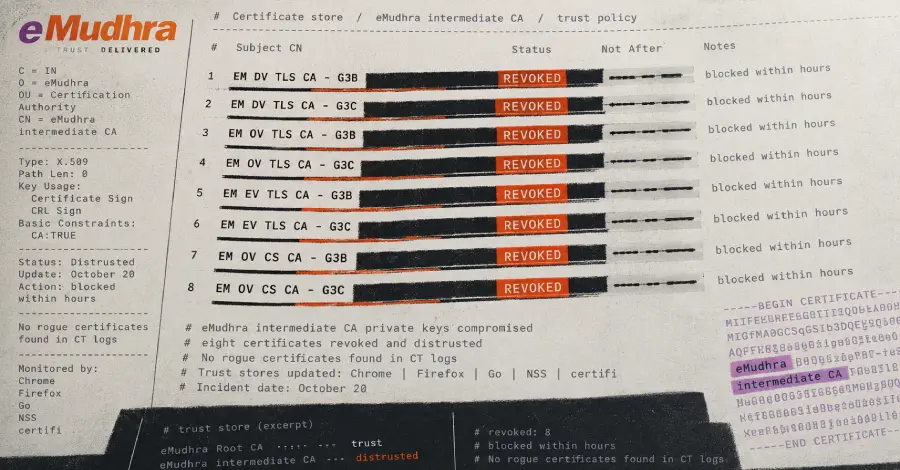
On October 20, Mozilla and Google’s Chrome Root Program announced that the private keys for eight e Mudhra intermediate certificate authority certificates had been compromised. The breach allows anyone possessing the keys to forge digital certificates that browsers would trust, potentially enabling spoofed websites and man‑in‑the‑middle attacks worldwide.
Breaking news
 AMD FSR 4.1 Lands on RX 6000, Xbox Series, and Ryzen AI Chips
 OpenAI Buys Orchestra Bio to Power Drug Discovery
 Accelerating Manufacturing-Aware Simulations For Photonic Integrated Circuits With FTCO And Digital Twins
 Germany’s data center expansion plan hits climate wall
The compromise was discovered by security researchers who noticed irregularities in certificate issuance patterns linked to e Mudhra, a major Indian CA. An intermediate CA sits between a root authority and end‑entity certificates; it signs the SSL/TLS certificates shown by websites. With the private keys exposed, attackers could generate valid certificates for any domain, bypassing the core trust model of the web. Mozilla and Google responded by revoking the affected intermediates and pushing emergency updates to Firefox, Chrome, and other browsers that rely on their root stores. Software vendors that embed these browsers also began rolling out patches to protect users.
The eight compromised keys belonged to e Mudhra’s „Intermediate CA” tier, which is used by numerous certificate‑issuing partners across Asia and the Middle East. Researchers traced suspicious certificate requests to a set of IP addresses that suddenly began issuing certificates for high‑profile domains. When the anomalies were reported, e Mudhra confirmed that the private keys had been stolen, likely through a targeted intrusion of their key‑management infrastructure.
In response, Mozilla added the compromised intermediates to its revocation list and released version 118.0 of Firefox with the changes. Google’s Chrome team updated the Chrome Root Store and issued a rapid update for Chrome 127, ensuring that browsers would reject any certificates signed with the stolen keys. Major operating systems, including Windows and macOS, received updates to their certificate stores to reflect the revocations.
Could This Lead to a Wider Trust Crisis?
The incident forced thousands of websites to replace their SSL/TLS certificates overnight. Some enterprises reported temporary service disruptions as their automated certificate renewal systems failed to obtain new certificates until the revocation propagated.
The breach raises concerns about the resilience of the public‑key infrastructure that underpins secure internet communication. If attackers had managed to use the stolen keys before revocation, they could have impersonated banking sites, government portals, or corporate intranets, harvesting credentials or injecting malware.
Experts warn that the incident underscores the need for stricter key‑management practices and more frequent rotation of intermediate keys. „Compromise of an intermediate CA is far more damaging than a single leaf certificate,” said Dr. Anita Rao, a cryptography specialist at the Institute of Secure Computing. „It effectively gives the attacker a master key to forge trust across the ecosystem.”
Frequently Asked Questions
The swift coordination between browser vendors, the CA, and security researchers limited the window of exposure, but the episode may prompt regulators to revisit compliance standards for certificate authorities, especially in regions where oversight is less stringent.
What should users do after hearing about this breach? Ensure your browser and operating system are up to date. Modern browsers automatically reject certificates signed with the compromised keys, so keeping software current protects you.
Will my personal data be at risk if I visited a site during the breach? If you accessed a site that presented a forged certificate before revocation, there was a risk of data interception. However, the rapid revocation limited this window, and most browsers would have warned you of an invalid certificate.
How can website owners verify their certificates are safe? Owners should check their certificate chain using online tools or browser developer consoles to confirm no revoked intermediates appear. If a compromised intermediate is listed, they must obtain a new certificate from a trusted CA and reinstall it promptly.