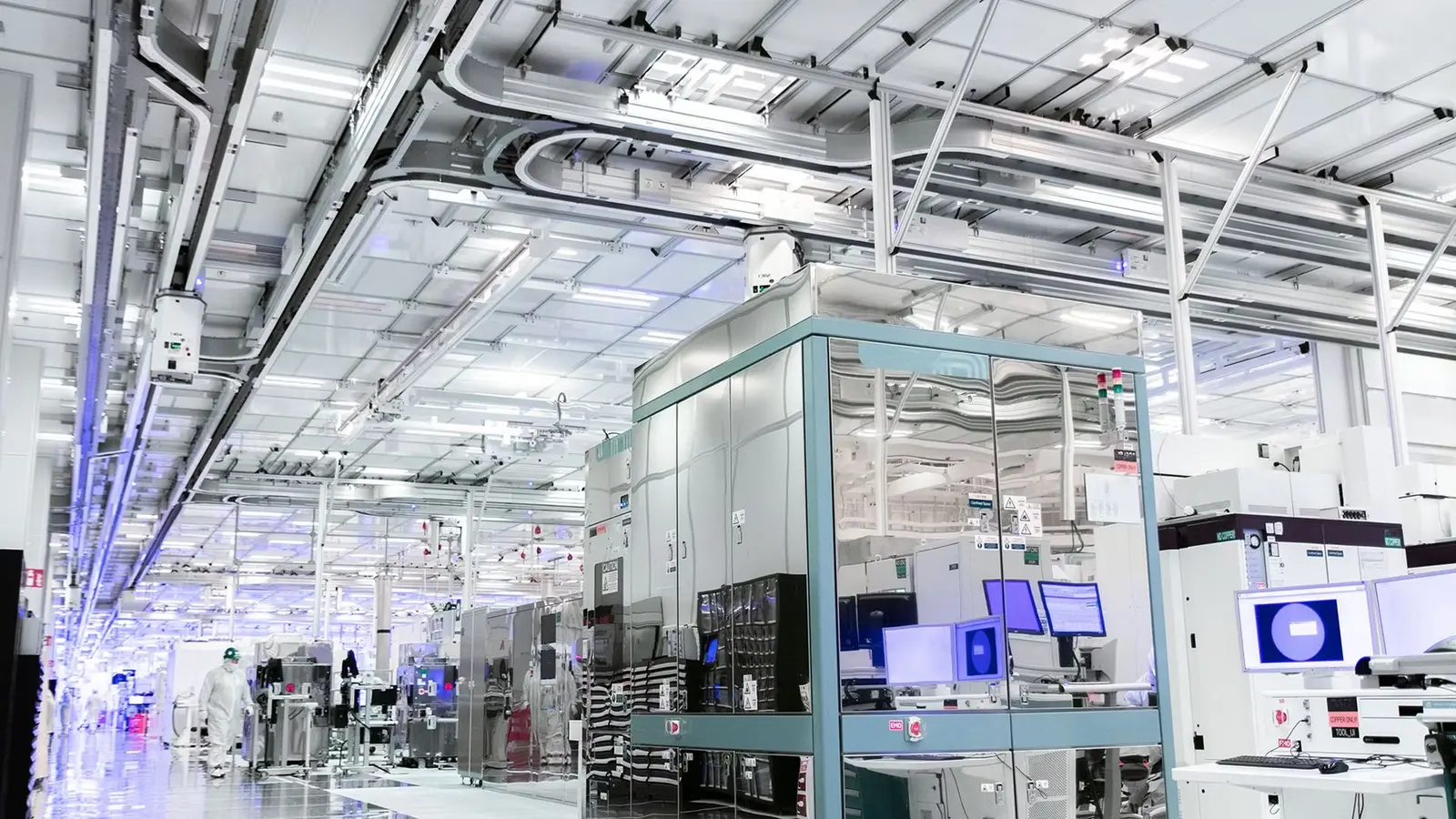
Narrowing the Technical Gap Between Rivals
Intel Foundry has officially projected that its upcoming 14A manufacturing node will achieve performance levels within five percent of TSMC’s comparable A14 technology. Naga Chandrasekaran, serving as Chief Technology and Operations Officer and General Manager of Intel Foundry, made this specific claim during a recent presentation. The statement was directed at analysts from KeyBanc Capital Markets, a prominent investment banking firm. This projection highlights Intel’s aggressive stance in the advanced semiconductor race.
Breaking news
 Trump Orders Federal Agencies to Adopt „Super Intelligence” Terminology
 The Silicon Valley Accountability Gap
 Running a Local AI Model on a Phone Handles Most Chat Prompts
 Google Photos Could Soon Offer a Fresh Start with Ask Photos Feature
The announcement underscores Intel’s confidence in its next-generation fabrication capabilities. By targeting such a narrow margin against its primary competitor, Intel signals a significant leap forward in its process roadmap. The 14A node represents a critical milestone for the company’s foundry division. It aims to close the historical gap in transistor density and speed that has favored TSMC for years. This strategic positioning is essential for regaining market share in high-performance computing sectors.
Chandrasekaran emphasized that the five-percent difference accounts for overall system performance metrics. These include power efficiency, area utilization, and raw computational speed. TSMC has long maintained a reputation for consistent yield and reliability at leading-edge nodes. Intel’s assertion suggests their new architecture mitigates previous bottlenecks effectively. The 14A process utilizes gate-all-around nanosheet transistors to enhance control over electron flow. This structural change allows for better performance per watt compared to earlier designs. The comparison serves as a benchmark for investors and customers evaluating future chip options.
Will Intel’s Claim Hold Up in Production?
The timing of this disclosure coincides with intense competition in the AI and mobile processor markets. Both companies are racing to deploy 1.4-nanometer-class technologies before 2025. Intel’s leadership believes their approach offers distinct advantages in specific workload scenarios. They argue that their integrated design methodology provides superior optimization opportunities. This strategy differentiates their offering from pure-play foundry models. The focus remains on delivering tangible value to early adopters of the new node.
While the projected numbers are promising, real-world validation remains pending. Industry experts note that within five percentcan vary significantly based on test conditions. TSMC’s A14 node is currently in advanced development stages with known partners. Intel must demonstrate consistent yields across large-scale production runs to prove the claim. Historical data shows that initial tape-outs often differ from final mass-production results. Stakeholders will closely monitor upcoming investor briefings for concrete yield figures. The success of 14A depends heavily on manufacturing consistency and defect reduction rates.
The broader implications extend beyond simple performance benchmarks. If Intel achieves this parity, it strengthens its position as a viable alternative to TSMC. This could influence supply chain decisions for major tech companies seeking diversification. The foundry market may see increased price competition as capabilities converge. Intel’s ability to execute this promise will define its relevance in the next decade. Failure to meet these targets could delay customer adoption and impact revenue projections.
Frequently Asked Questions
Who announced the 14A performance target? Naga Chandrasekaran, the Chief Technology and Operations Officer of Intel Foundry, disclosed the target. He presented these figures to KeyBanc Capital Markets during an analyst session.
How does Intel 14A compare to TSMC A14? Intel projects that the 14A node will perform within five percent of TSMC’s A14 node. This metric encompasses power, performance, and area efficiency standards.
When is the 14A node expected to launch? The 14A process is part of Intel’s roadmap for the 1.4-nanometer class. Specific commercial availability dates depend on successful pilot production outcomes.