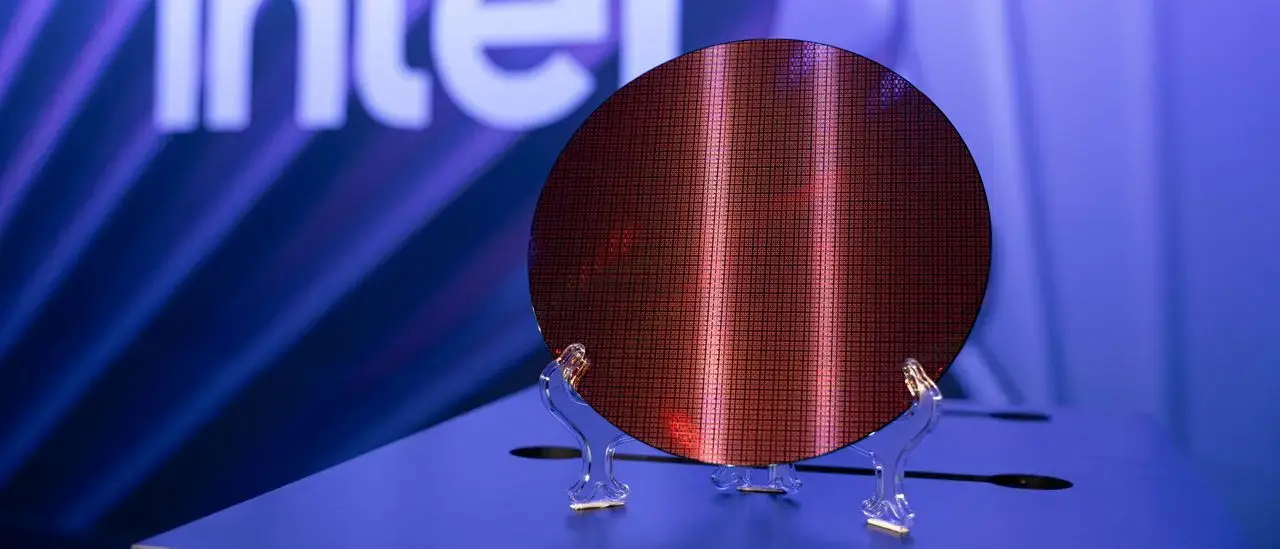
How Does 1.28 GB of Cache Change Server Workloads?
Intel has revealed details of its upcoming Xeon 7 processor, codenamed Diamond Rapids, featuring up to 256 performance cores and 1.28 GB of last-level cache. The chip is slated for release in 2027 and targets data center workloads requiring extreme parallel processing. This launch continues Intel's roadmap for high-core-count server CPUs built on advanced process technology.
Breaking news
 Canonical’s Web Presence Hit by Second DDoS Assault This Year
 Loops AI Secures $3.5 Million to Power a New AI Operating System for E‑Commerce
 Winverse AI Secures Tens of Millions in Seed Funding from DeepSeek and Long‑Z
 Google Adds Pixel 9 Series to Certified Refurbished Store
The Diamond Rapids architecture represents a significant leap in core density, doubling the P-core count compared to previous generations. Built on Intel's 18A-P process node, the CPU integrates enhanced cache hierarchy and improved interconnects to support massive thread counts. These advancements aim to address growing demands in AI training, scientific simulation, and cloud infrastructure where raw compute throughput is critical. Intel emphasizes that the design maintains compatibility with existing server platforms while enabling new performance tiers.
The 1.28 GB last-level cache in Diamond Rapids is intended to reduce memory latency for data-intensive applications by keeping frequently accessed data closer to the cores. This large cache pool helps mitigate bottlenecks in workloads with irregular memory access patterns, such as graph analytics or large-scale database operations. Intel states that the cache structure is non-uniform and optimized for distributed access across the 256-core die, improving efficiency in multi-socket configurations.
What Challenges Come With Scaling to 256 Cores?
Scaling to 256 P-cores introduces complexities in power delivery, thermal management, and software optimization. Intel notes that the 18A-P process helps mitigate leakage and improve performance per watt, but system-level cooling and power infrastructure will need upgrades in data centers. Additionally, operating systems and applications must be optimized to exploit such high core counts effectively, or performance gains may be limited by synchronization overhead and memory bandwidth constraints.
The Diamond Rapids Xeon 7 is positioned as a foundational component for next-generation data centers through 2027 and beyond. Its success will depend on ecosystem readiness, including firmware, virtualization layers, and workload scheduling tools capable of harnessing massive parallelism. Intel views this CPU as a step toward exascale-ready infrastructure for enterprise and research environments.
Frequently Asked Questions
Will Diamond Rapids support existing DDR5 memory? Yes, Intel confirms Diamond Rapids will support DDR5 memory with enhanced memory controllers to handle increased bandwidth demands from the high core count.
Is the 256 P-core configuration the only option offered? No, Intel plans a range of Diamond Rapids SKUs with varying core counts, allowing customers to choose based on workload needs and power constraints.
When will systems featuring Diamond Rapids be available to customers? Systems based on Diamond Rapids Xeon 7 are expected to become available in the second half of 2027, following initial sampling to major OEMs and cloud providers.