Fingerprinting Gate Shapes the Attack Surface
A sprawling macOS ClickFix operation now runs across more than 250 front‑end domains. The campaign began targeting users in early 2026, and Microsoft Threat Intelligence confirmed the shift to fingerprint‑based selection last month. The new gate decides whether to display a malicious lure based on each visitor’s browser profile.
Breaking news
 Town AI Secures $108 Million Series B, Valued at $1 Billion After $55 M Pre‑Series
 Apple Prepares for Major Product Launch Event on October 28
 Apple Releases Release Candidates for watchOS, tvOS and visionOS 27.2
 Apple Limits iPhone Duo and iPhone 18 Pro Max to Reservation-Only Sales in Japan and South Korea
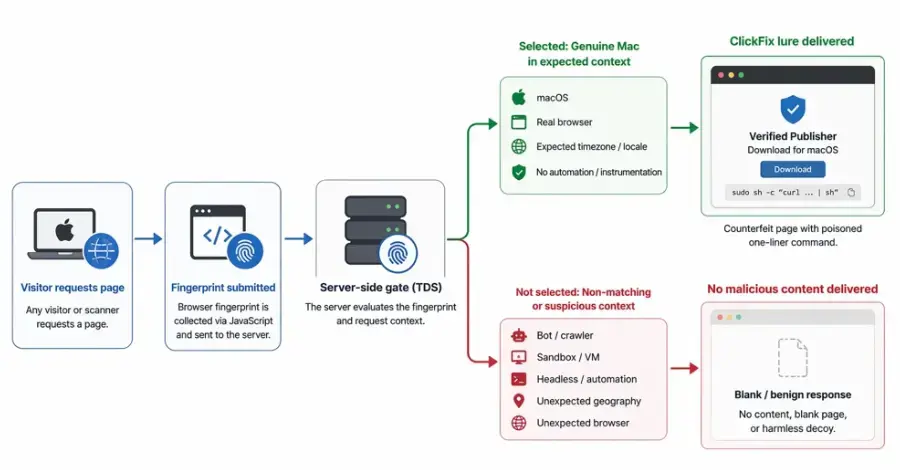
The change marks a tactical upgrade for the operators. By collecting data such as OS version, installed plugins, and screen resolution, the server can weed out users unlikely to download the payload. This reduces exposure and helps the group avoid detection. Microsoft researchers observed the fingerprinting logic in the server‑side gate, noting that the malicious page remains hidden until the criteria are met.
The fingerprinting gate acts as a filter before the malicious page loads. When a visitor reaches a ClickFix domain, the server runs a quick script that gathers dozens of browser attributes. If the profile matches a macOS system with a vulnerable version of Safari or a specific security configuration, the gate serves the lure; otherwise, it returns a benign page or a 404 error. This approach saves bandwidth and lowers the odds of triggering security alerts.
Why Is Browser Fingerprinting Critical for the Campaign?
Microsoft’s threat team tracked the infrastructure for weeks, noting that the same set of domains shared identical fingerprinting code. The code appears to be a lightweight JavaScript module, easily inserted into any web page. Researchers say the module can be updated remotely, allowing the attackers to refine their selection criteria on the fly. The operation’s scale—over 250 domains—suggests a coordinated effort, possibly backed by a larger cybercrime group.
Fingerprinting gives the attackers a stealth advantage. Traditional malware drops often rely on broad distribution, which can attract attention from security tools. By only serving the payload to carefully profiled machines, the campaign minimizes false positives and reduces the chance of early disruption. The technique also enables the group to target high‑value macOS users, such as developers or enterprise employees, who may be more likely to run unsigned software.
Analysts believe the shift reflects a broader trend among threat actors to use client‑side intelligence for precision strikes. As security products improve at catching generic malicious downloads, attackers respond by narrowing their focus to the most receptive targets. The ClickFix network’s use of fingerprinting illustrates how a seemingly innocuous web interaction can become a gateway to infection.
The campaign’s evolution signals heightened risk for macOS users who browse lesser‑known sites. Security vendors are expected to update detection signatures to include the fingerprinting script, while organizations may need to enforce stricter browser hardening policies. Ongoing monitoring will determine whether the attackers expand the technique to other platforms or retain it as a macOS‑specific vector.
Frequently Asked Questions
What is the ClickFix operation? ClickFix is a network of compromised or malicious websites that lure macOS users into downloading malware. The recent upgrade adds a fingerprinting step to target only suitable victims.
How does browser fingerprinting work in this context? The server runs a lightweight script that collects details like operating system, browser version, and installed plugins. It then compares the data against a predefined profile before serving the malicious page.
What can users do to protect themselves? Keep macOS and browsers up to date, use reputable security software, and avoid downloading files from unknown sites. Disabling unnecessary plugins and employing privacy‑focused browsers can also reduce fingerprinting effectiveness.