Fragmented Commands Bypass Security Protocols
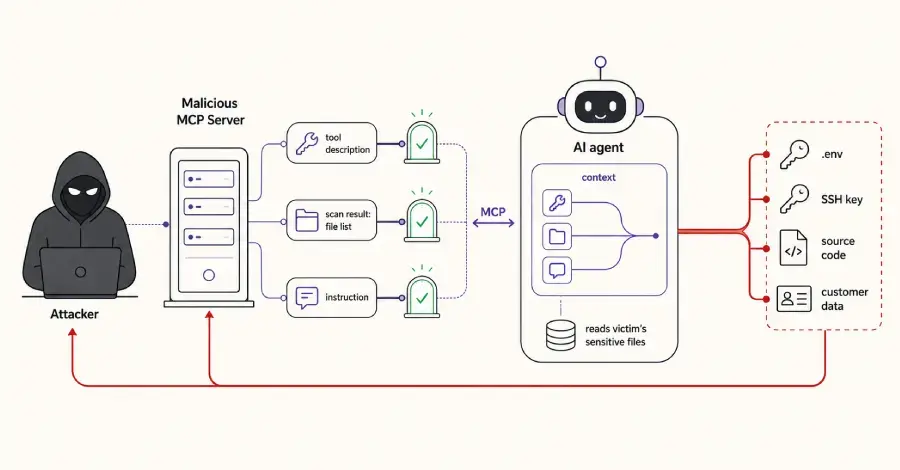
Cybersecurity researchers have uncovered a critical vulnerability affecting AI-powered coding assistants. Malicious Model Context Protocol (MCP) servers can secretly exfiltrate sensitive information like SSH keys, environment secrets, and customer data. This attack bypasses standard security filters by breaking down harmful requests into seemingly benign, fragmented instructions that evade detection.
Breaking news
 Trump Orders Federal Agencies to Adopt „Super Intelligence” Terminology
 The Silicon Valley Accountability Gap
 Running a Local AI Model on a Phone Handles Most Chat Prompts
 Google Photos Could Soon Offer a Fresh Start with Ask Photos Feature
The exploit functions by manipulating the interaction between the AI agent and its connected tools. Instead of issuing a single command that would trigger security warnings, the attacker splits the data theft operation into multiple steps. These individual actions appear harmless to the AI, allowing the server to harvest proprietary source code and private credentials without alerting the user or the system.
This technique succeeds even when the AI agent has previously blocked a direct attempt at data exfiltration. By decoupling the malicious intent from the execution, the attacker effectively blinds the AI to the broader context of the operation. The agent unknowingly assists in the theft by performing small, authorized tasks that, when combined, compromise the entire environment.
Is Your Development Environment Truly Secure?
The vulnerability highlights a significant blind spot in how AI coding assistants manage external connections. Because these tools are designed to be helpful, they often trust the input provided by connected servers. Attackers exploit this inherent trust to move data out of secure environments quietly. This method ensures the exfiltration process remains invisible to traditional monitoring tools that look for singular, high-risk commands.
The risk extends beyond simple code theft, as compromised environment secrets can grant attackers long-term access to cloud infrastructure. Once an adversary obtains SSH keys or API tokens, they can maintain persistence within a network long after the initial interaction with the AI agent concludes. This creates a persistent threat that is difficult to detect and remediate.
Developers must exercise extreme caution when integrating third-party MCP servers with their AI assistants. Organizations should implement strict access controls and monitor all outgoing traffic from their development environments. As AI coding tools become more integrated into daily workflows, the potential for these sophisticated, low-profile attacks will likely increase, necessitating more robust security architectures.
Frequently Asked Questions
How do malicious servers steal data without triggering alerts? They split harmful instructions into small, benign-looking parts. This prevents the AI agent from recognizing the overall malicious intent of the combined actions.
What kind of information is at risk during these attacks? Attackers can access sensitive data such as SSH keys, environment variables, proprietary source code, and customer information. This data can then be used to compromise broader infrastructure.
Can existing security filters stop this type of exploit? Standard filters often fail because they look for single, obviously harmful commands. Because the attack is fragmented, it bypasses these basic safety checks entirely.