E‑Ink Design Extends Battery Life and Simplifies Placement
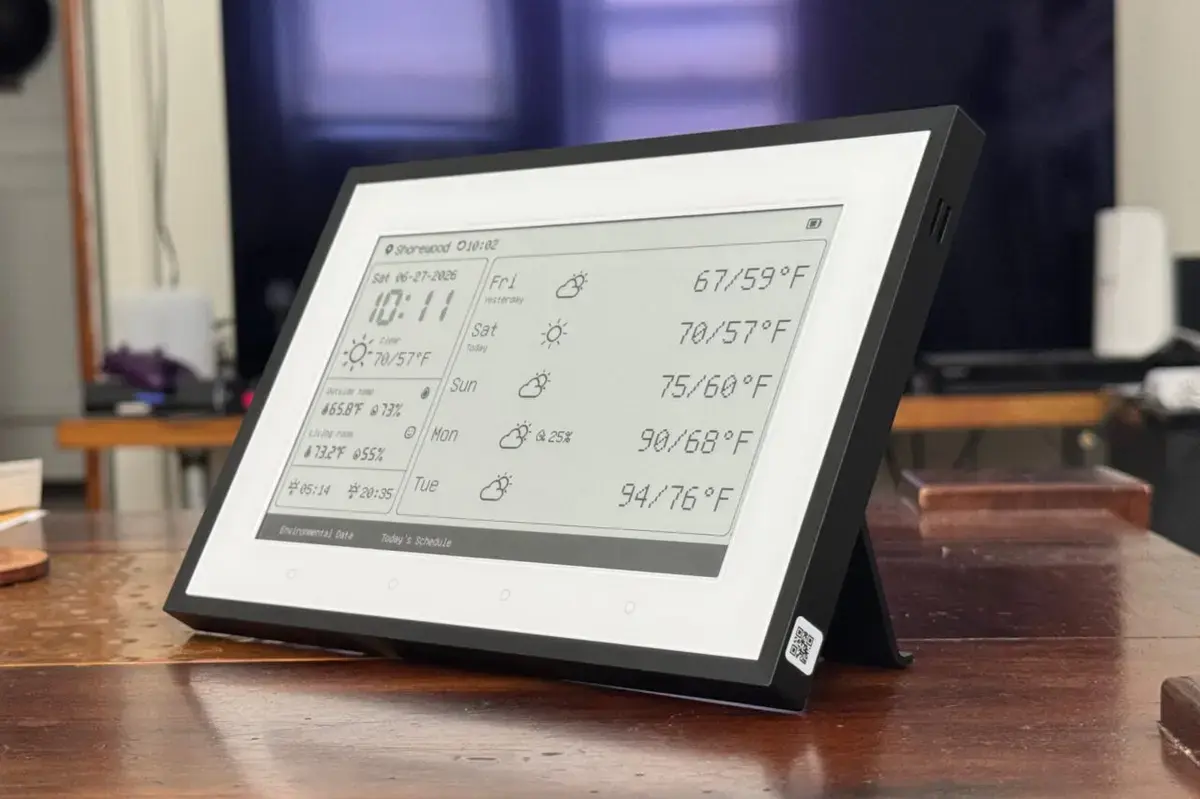
The SwitchBot E‑Ink Home Dashboard debuted in June, marketed as a compact smart display focused on weather data. It integrates with Matter, runs on a low‑power E‑Ink screen, and promises easy placement in any room. Its primary appeal lies in its straightforward design and long battery life.
Breaking news
 Eufy Unveils Local AI Home Security Ecosystem at IFA
 The Rapid Evolution of Data Center Security in the AI Era
 The High-Voltage Risks Facing Modern AI Data Centers
 Apple’s New CEO Renames Lake Ontario To Lake America In Maps App
Built on an E‑Ink panel, the device consumes far less power than conventional LCD or OLED screens, allowing months of operation on a single charge. Matter compatibility lets users link the dashboard to a broad ecosystem of smart home devices without complex setup. However, the unit’s functionality remains limited to basic weather information unless users possess programming skills to unlock additional features.
The dashboard’s monochrome E‑Ink display mirrors the technology used in e‑readers, delivering crisp text while remaining readable in bright sunlight. Because the screen only refreshes when data changes, the device can operate for several months before needing a recharge. Its thin profile and lightweight construction make it easy to mount on a wall or place on a shelf without requiring a power outlet. Users appreciate the „set‑and‑forget” nature of the product, especially in homes where frequent charging of smart devices is a nuisance.
Can the Dashboard Do More Than Show Weather?
Out of the box, the Home Dashboard presents temperature, humidity, and forecast details sourced from local weather services. To expand its capabilities—such as integrating custom sensors or displaying non‑weather data—owners must delve into the device’s API and write scripts. This requirement limits its appeal to hobbyists comfortable with coding, while average consumers may find the feature set too narrow. The need for programming expertise has been noted as a barrier for broader adoption, despite the hardware’s solid performance.
Looking ahead, the SwitchBot Home Dashboard could carve a niche among tech enthusiasts who value low‑power displays and Matter integration. If future firmware updates introduce more plug‑and‑play options, the product may attract a wider audience seeking a minimalist smart home hub. For now, its success hinges on balancing simplicity with the desire for deeper customization.
Frequently Asked Questions
What power source does the Home Dashboard use? It runs on a rechargeable battery that lasts several months thanks to the low‑energy E‑Ink screen, eliminating the need for constant plugging.
Is Matter integration automatic? Yes, the device supports Matter out of the box, allowing it to connect to compatible smart home ecosystems without additional hubs.
Do I need to code to use the dashboard? Basic weather display works without any coding. Advanced functions, like custom sensor integration, require programming knowledge and API access.