Breaking the Memory Barrier with LPDDR6
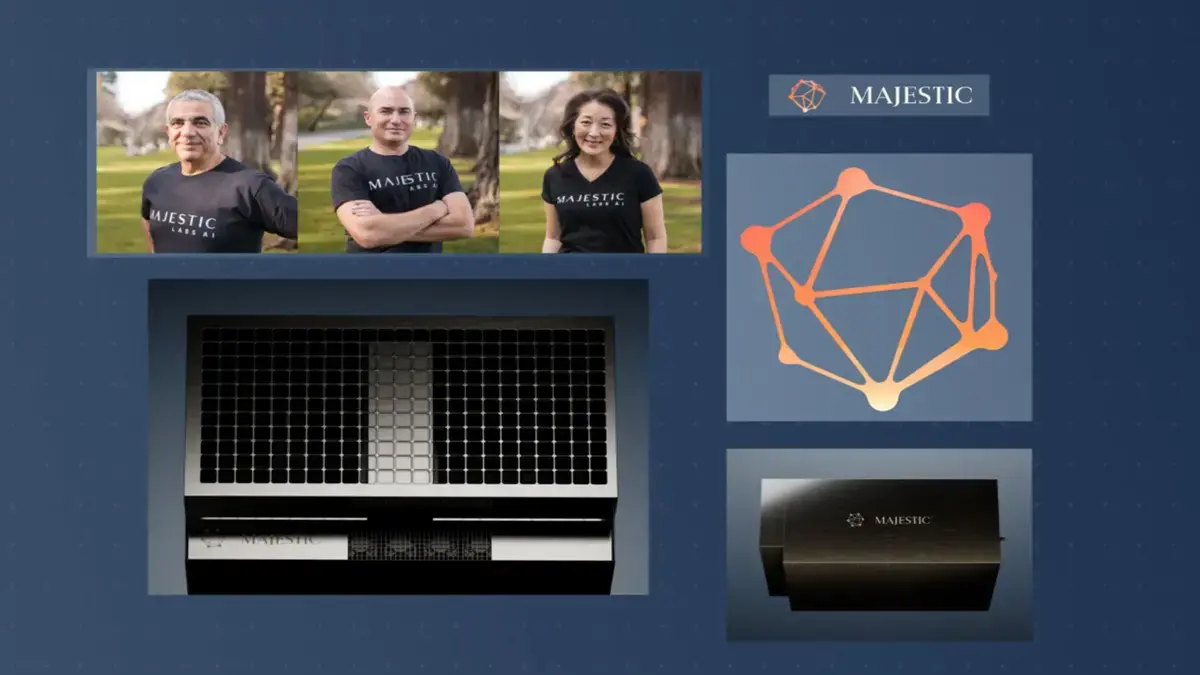
A new artificial intelligence startup, Majestic Labs, has introduced an innovative server design. This system replaces traditional GPUs with Arm-based processors. It also uses up to 128TB of LPDDR6 memory, a much cheaper alternative to HBM. The company believes this approach can overcome current memory limitations in AI.
Breaking news
 Trump Orders Federal Agencies to Adopt „Super Intelligence” Terminology
 The Silicon Valley Accountability Gap
 Running a Local AI Model on a Phone Handles Most Chat Prompts
 Google Photos Could Soon Offer a Fresh Start with Ask Photos Feature
This strategy aims to reduce the high costs associated with powerful AI hardware. By shunning expensive HBM (High Bandwidth Memory), Majestic Labs hopes to make AI development more accessible. Their solution focuses on efficiency and affordability for large-scale AI operations.
Will This Disrupt the AI Hardware Market?
The core of Majestic Labs' innovation lies in its memory choice. LPDDR6 is significantly less expensive than the HBM typically found in high-end AI accelerators. This cost difference allows for massive amounts of memory to be integrated into their servers. Such large memory pools are crucial for training increasingly complex AI models. The company claims this unified memory architecture can outperform traditional GPU setups.
# What is the main innovation of Majestic Labs' new server?
The shift to Arm cores also represents a departure from the x86 architecture often paired with GPUs. This combination of Arm and LPDDR6 is designed to provide a powerful yet economical platform. It targets the growing demand for AI compute resources without the prohibitive price tag. This could democratize access to advanced AI training and inference.
Majestic Labs' bold claim suggests a potential shake-up in the AI hardware industry. Nvidia currently dominates the market with its powerful GPUs and HBM. A viable, cheaper alternative could attract many AI developers and businesses. The success of this new architecture hinges on its real-world performance and scalability. If it delivers on its promises, it could force established players to re-evaluate their strategies. This could lead to more competition and innovation in AI hardware.
# How does LPDDR6 memory compare to HBM?
The main innovation is replacing costly AI GPUs with Arm cores. It also uses up to 128TB of LPDDR6 memory instead of expensive HBM. This aims to provide a more affordable and efficient AI computing platform.
# What impact could this have on the AI industry?
LPDDR6 memory is significantly cheaper than HBM. This cost difference allows for much larger memory capacities in the server. This can be beneficial for training very large AI models.
This could potentially disrupt the AI hardware market by offering a lower-cost alternative to current GPU-based systems. It might make advanced AI development more accessible and foster greater competition among hardware providers.