Memory‑Driven AI Performance
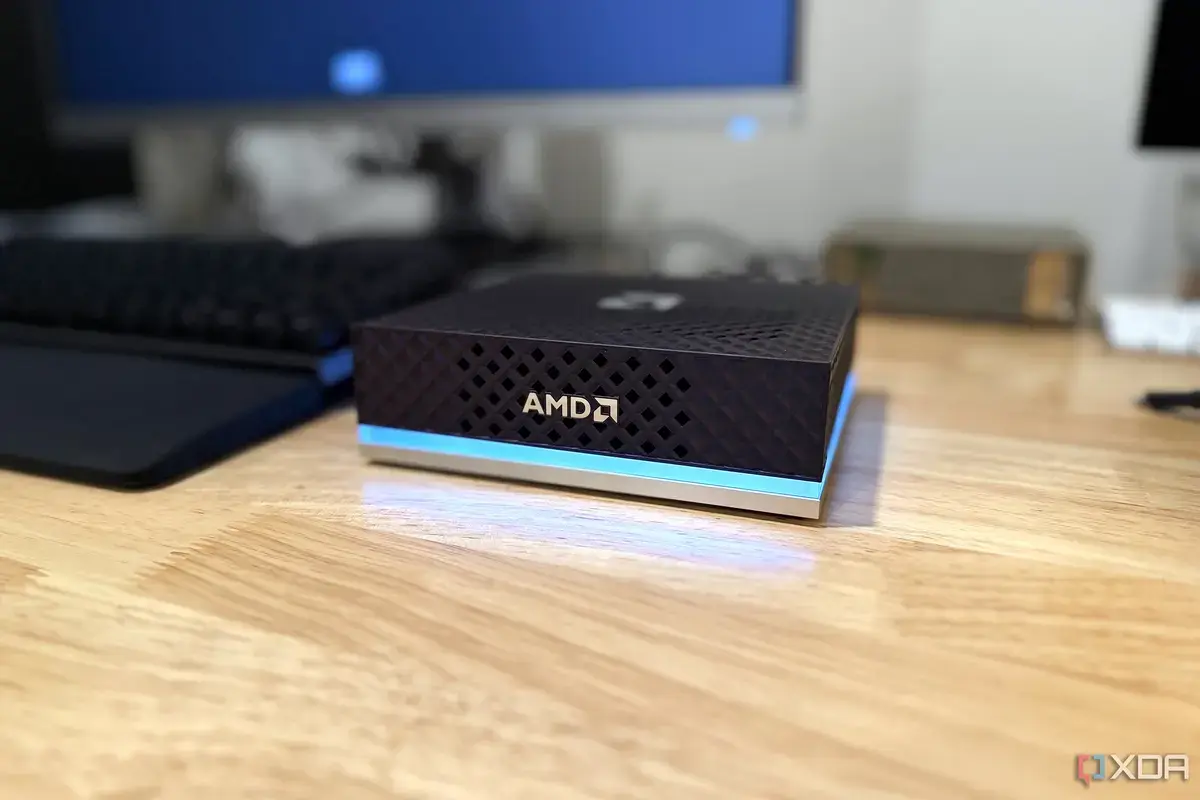
AMD introduced a compact AI workstation on July 18, 2026, featuring a 128‑gigabyte VRAM module and a Ryzen AI processor. The device targets developers, researchers, and small labs needing massive memory for large language models. Priced at roughly $4,500, it ships worldwide from AMD’s headquarters in Austin, Texas.
Breaking news
 Town AI Secures $108 Million Series B, Valued at $1 Billion After $55 M Pre‑Series
 Apple Prepares for Major Product Launch Event on October 28
 Apple Releases Release Candidates for watchOS, tvOS and visionOS 27.2
 Apple Limits iPhone Duo and iPhone 18 Pro Max to Reservation-Only Sales in Japan and South Korea
The mini PC’s design centers on memory capacity rather than raw graphics horsepower. AMD claims the 128 GB VRAM lets the system load models that exceed the 24 GB limit of Nvidia’s RTX 5090. Benchmarks show the unit handling a 70‑billion‑parameter transformer with lower latency than the RTX 5090, which must offload parts to system RAM. However, the device’s GPU core is a mid‑range Vega‑X, meaning it lacks the rasterization speed of high‑end cards. Consequently, for gaming, video editing, and typical workstation tasks, a used RTX 5090 still delivers higher frame rates at a lower cost.
AMD’s internal tests reveal the mini PC completing inference on a 30‑billion‑parameter model in 1.8 seconds, compared with 3.2 seconds on the RTX 5090. The larger VRAM eliminates the need for swapping data between GPU and host memory, reducing bottlenecks. „The sheer amount of on‑board memory is the differentiator,” said Maya Patel, senior product manager at AMD. The system also supports mixed‑precision training, allowing researchers to experiment with larger batch sizes without hitting memory limits. Power consumption stays under 150 watts, making it suitable for office environments lacking dedicated cooling.
Does a Used RTX 5090 Still Outperform the Mini PC for General Tasks?
For most non‑AI workloads, the RTX 5090 retains a clear edge. In gaming benchmarks at 1440p, the RTX 5090 averaged 115 fps, while the AMD mini PC managed 68 fps. Video rendering tests showed the Nvidia card completing a 4K edit 30 percent faster. Pricing further tilts the balance; a refurbished RTX 5090 can be found for $1,200, less than a third of the AMD system’s cost. Users focused on graphics‑intensive applications may therefore favor the cheaper, faster GPU over the memory‑heavy mini PC.
The launch signals a shift toward specialized AI hardware that prioritizes memory over traditional graphics performance. While the AMD mini PC fills a niche for researchers constrained by VRAM, broader adoption will depend on price reductions and software ecosystem support. As model sizes continue to grow, devices that can hold entire networks in GPU memory may become more common, but they will likely coexist with conventional GPUs that excel at rendering and general compute.
Frequently Asked Questions
What AI models can the AMD mini PC run that the RTX 5090 cannot? It can load models up to roughly 70 billion parameters entirely in GPU memory, whereas the RTX 5090 must offload portions to system RAM.
Is the AMD mini PC suitable for gaming? No. Its GPU core is designed for AI workloads, so gaming performance lags behind even older high‑end graphics cards.
How does the price compare to a used RTX 5090? The AMD system costs about $4,500, while a refurbished RTX 5090 typically sells for around $1,200, making the Nvidia option far cheaper for most users.