How Does HBM3e Enable Local AI Performance
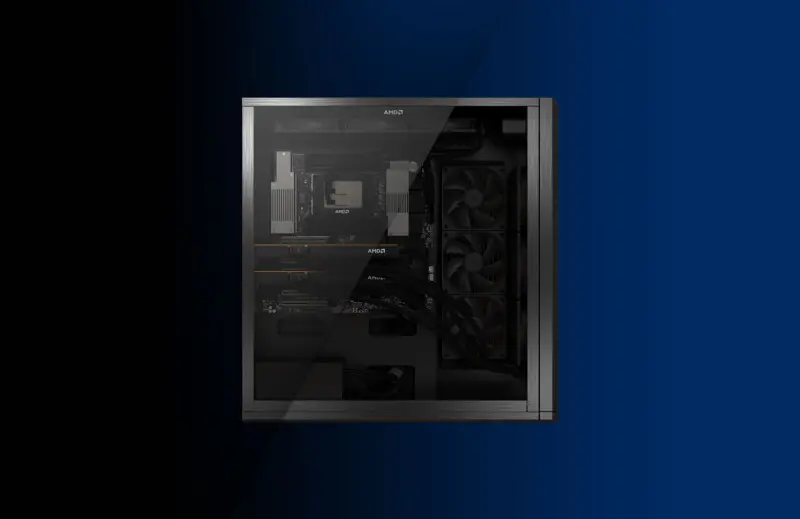
AMD has unveiled the Threadripper Halo, a high-end workstation designed for researchers needing local AI processing power. Announced on September 4, 2026, the system targets professionals with substantial budgets who require on-premise solutions for large model training and inference. It integrates cutting-edge memory technology to handle demanding workloads without relying on cloud infrastructure.
Breaking news
 Trump Orders Federal Agencies to Adopt „Super Intelligence” Terminology
 The Silicon Valley Accountability Gap
 Running a Local AI Model on a Phone Handles Most Chat Prompts
 Google Photos Could Soon Offer a Fresh Start with Ask Photos Feature
The workstation supports up to 576 gigabytes of HBM3e memory, delivering an unprecedented 16 terabytes per second of memory bandwidth. This configuration aims to eliminate bottlenecks when processing massive datasets or running complex neural networks locally. AMD positions the Halo as a solution for institutions and labs that prioritize data sovereignty, low latency, and consistent performance over cloud-based alternatives.
HBM3e memory provides significantly higher bandwidth and lower power consumption compared to traditional DDR5 or GDDR6 solutions. By stacking memory dies vertically and connecting them through advanced interconnects, AMD achieves data transfer rates essential for feeding multiple GPU cores simultaneously. This architecture reduces the time spent waiting for data, allowing compute units to operate closer to peak efficiency during AI workloads.
What Challenges Remain for On-Premise AI Deployment
Researchers working with large language models or multimodal AI systems benefit from the ability to keep entire models in memory. This avoids costly data swapping between storage and RAM, which can severely slow down training iterations. The Threadripper Halo’s memory subsystem is engineered to sustain these high-throughput demands continuously.
Despite its impressive specifications, the Threadripper Halo faces practical limitations in broader adoption. The system’s cost, driven by exotic memory and specialized cooling, places it out of reach for most individual researchers or small teams. Additionally, power delivery and thermal management become critical concerns when sustaining peak performance over extended periods.
Software optimization also plays a key role; fully utilizing the memory bandwidth requires applications designed to exploit HBM3e’s unique characteristics. AMD is working with software partners to ensure compatibility with popular AI frameworks, but widespread support may take time to mature.
Frequently Asked Questions
What is the primary use case for the Threadripper Halo? The workstation is intended for AI researchers and developers who need to run large models locally due to security, latency, or data control requirements, particularly in government, finance, or healthcare sectors.
How does the memory bandwidth compare to consumer-grade systems? At 16 TB/s, the Threadripper Halo offers over 100 times the memory bandwidth of typical high-end desktop PCs, which usually provide around 100-200 GB/s with DDR5 memory.
Is the Threadripper Halo available for purchase now? AMD has announced the platform but has not disclosed pricing or exact availability timelines, indicating it remains in the late development or early access phase for select partners.