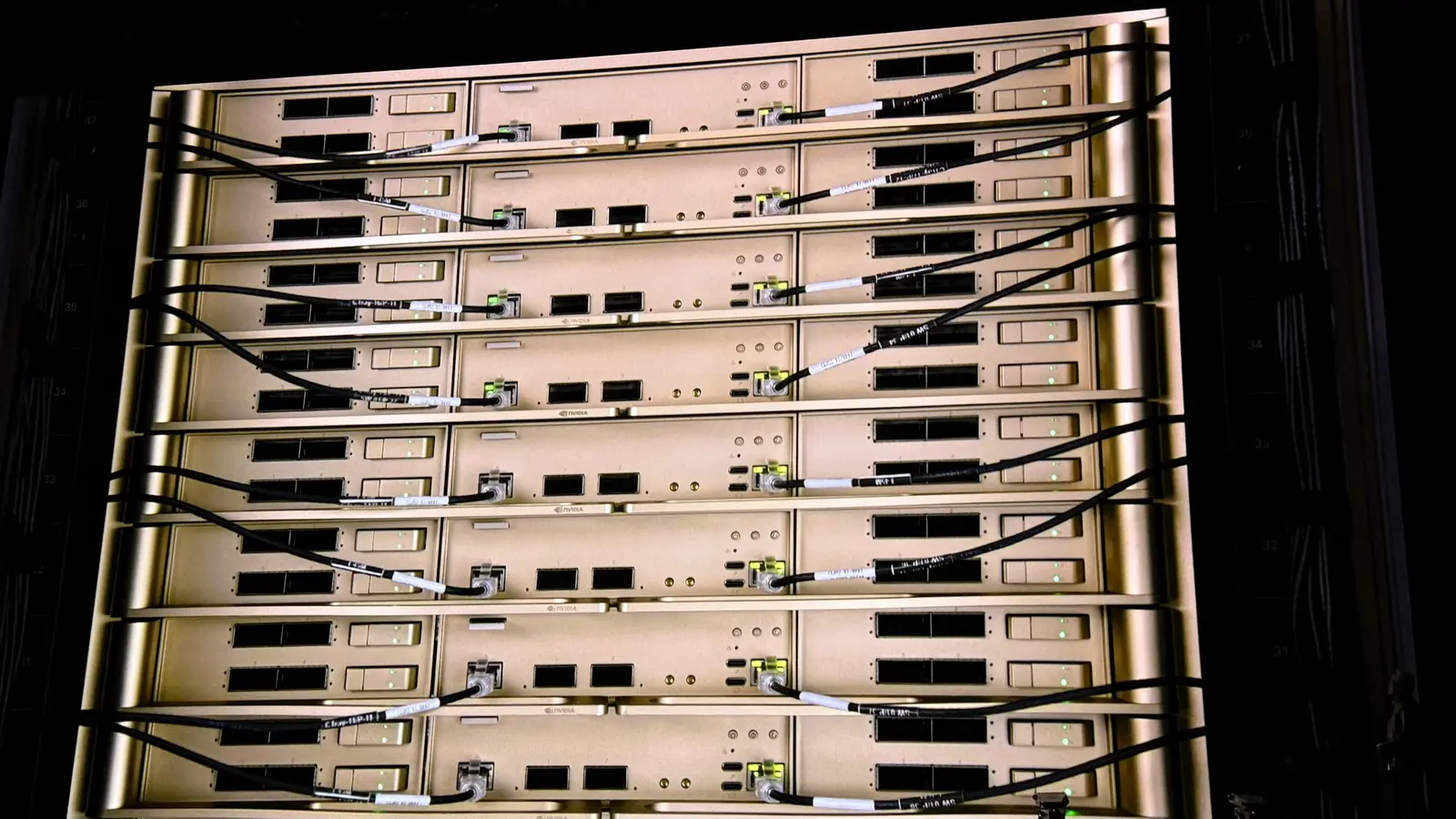
Replacing Cables with a Single Board
SpaceX is developing a custom rack-scale AI system called Kessel for space-based data centers. The design replaces standard cable assemblies with a massive 84-layer printed circuit board. This move targets the extreme conditions of orbital computing environments.
Breaking news
 Tesla rolls out FSD v15 with major safety upgrade
 Open-Source Tools Challenge AI-Powered Development Platforms
 AI Infrastructure Bottlenecks: Why Release Pipelines Hold Back Fast Clusters
 Why Apple Vision Pro Never Took Off Like Meta's VR Headsets
The Kessel system retains 36 Vera CPUs and 72 Nvidia Rubin GPUs. It also includes nine NVLink switches. The key innovation is the elimination of conventional NVLink cables. Instead, a single large PCB handles all interconnects. This reduces failure points in a space environment.
Why Space Needs a New Rack Design
Traditional AI racks rely on bundles of NVLink cables to connect GPUs. SpaceX swaps these for a rigid, multi-layer board. This design choice addresses the vibration and thermal stress of launch and orbit. A single board is easier to test and more reliable in space. The system is built specifically for the demands of orbital infrastructure.
Orbital data centers face unique engineering challenges. Weight, power, and thermal management are critical. Cables add mass and failure risk. A PCB-based interconnect solves these issues. SpaceX aims to deploy AI workloads in space to leverage unlimited cooling and energy. The Kessel rack is a step toward that goal.
Frequently Asked Questions
What is the Kessel system? The Kessel system is a custom AI rack developed by SpaceX. It uses 72 Nvidia Rubin GPUs and 36 Vera CPUs. It replaces NVLink cables with an 84-layer PCB for space use.
Why does SpaceX use a PCB instead of cables? Cables are fragile and add weight. A single PCB is more robust for launch vibrations and orbital conditions. This improves reliability for space-based AI computing.