Streamlining the Path from Grid to Silicon
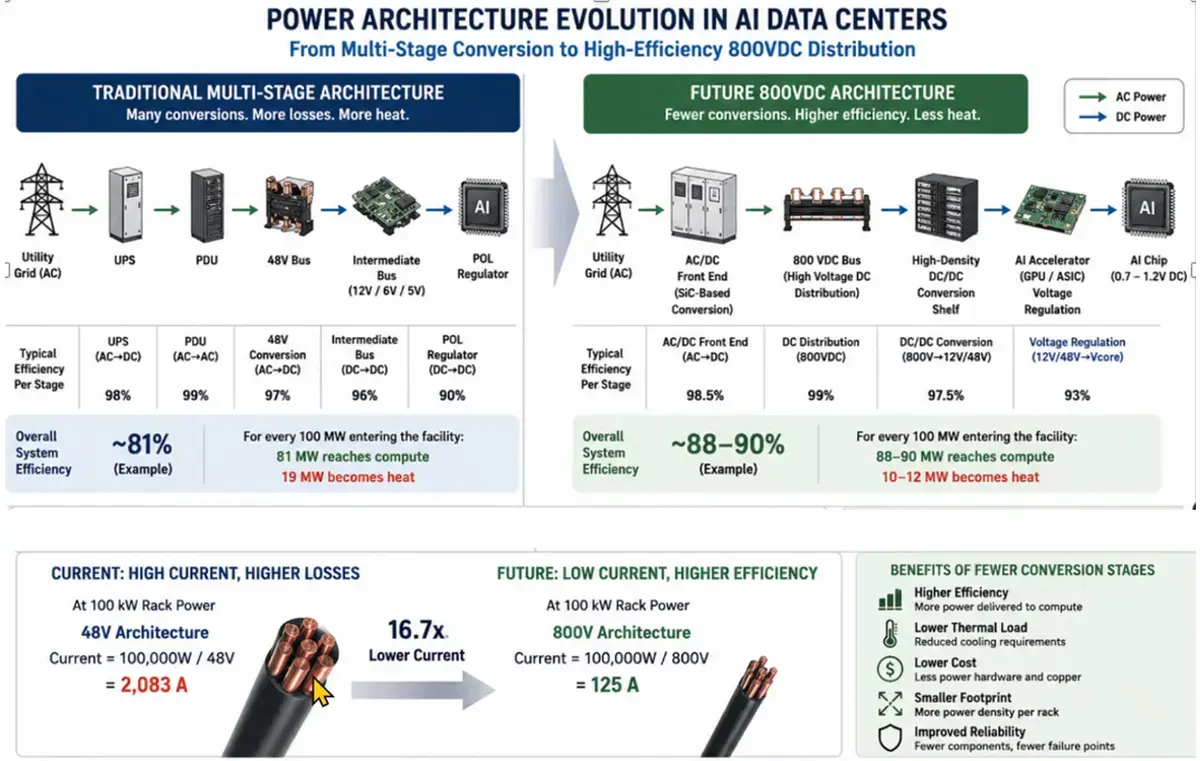
AI data centers are facing a massive energy crisis as processing demands skyrocket. Engineers are now shifting from traditional 48V systems to 800VDC architectures to manage power delivery. This transition aims to simplify the conversion path from the electrical grid directly to the high-performance accelerators that drive modern artificial intelligence workloads.
Breaking news
 Trump Orders Federal Agencies to Adopt „Super Intelligence” Terminology
 The Silicon Valley Accountability Gap
 Running a Local AI Model on a Phone Handles Most Chat Prompts
 Google Photos Could Soon Offer a Fresh Start with Ask Photos Feature
The move to 800VDC addresses a critical bottleneck in modern computing infrastructure. Previously, data centers relied on multiple conversion stages to step down high-voltage grid power to the low-voltage DC required by processors. By adopting 800VDC, facilities can eliminate redundant conversion steps, significantly reducing energy waste and heat generation during the distribution process.
Traditional power distribution systems struggle to keep pace with the massive current requirements of modern AI chips. Using 48V architectures requires thick, heavy cabling to handle the immense load, leading to significant copper usage and installation complexity. Higher voltage systems allow for lower current levels, which directly translates to thinner wiring and reduced infrastructure costs.
Can 800VDC Solve the Looming Energy Bottleneck?
This architectural shift represents a fundamental change in how power is managed at scale. By bringing higher voltage closer to the rack, engineers minimize the distance that low-voltage, high-current electricity must travel. This design philosophy reduces resistive losses, ensuring that more energy reaches the processors rather than being dissipated as waste heat within the facility.
The primary challenge for data center operators is balancing performance with sustainability. As AI models grow in size and complexity, the power density within server racks has reached unprecedented levels. The 800VDC approach provides a more efficient framework to handle these dense loads while simplifying the physical layout of the power delivery network.
Frequently Asked Questions
Looking ahead, the industry must standardize these high-voltage systems to ensure compatibility across hardware ecosystems. If successful, this transition will be essential for the continued expansion of AI capabilities. Without such improvements in power efficiency, the physical limitations of electrical delivery could eventually stall the progress of large-scale machine learning deployments.
Why is 800VDC more efficient than 48V? It requires fewer conversion stages to step down power from the grid to the chip. This reduction in steps lowers energy loss and improves overall system efficiency.
What is the main benefit regarding infrastructure materials? The higher voltage allows for lower current, which significantly reduces the amount of copper wiring needed. This simplifies installation and lowers the physical footprint of power distribution.