
Regulatory Pressure Mounts on AI Incident Transparency
Financial regulators are calling for new rules requiring companies to disclose significant artificial intelligence failures and near-misses, according to a senior UK Financial Conduct Authority official who spoke publicly this week.
Breaking news
 Accelerating Manufacturing-Aware Simulations For Photonic Integrated Circuits With FTCO And Digital Twins
 Germany’s data center expansion plan hits climate wall
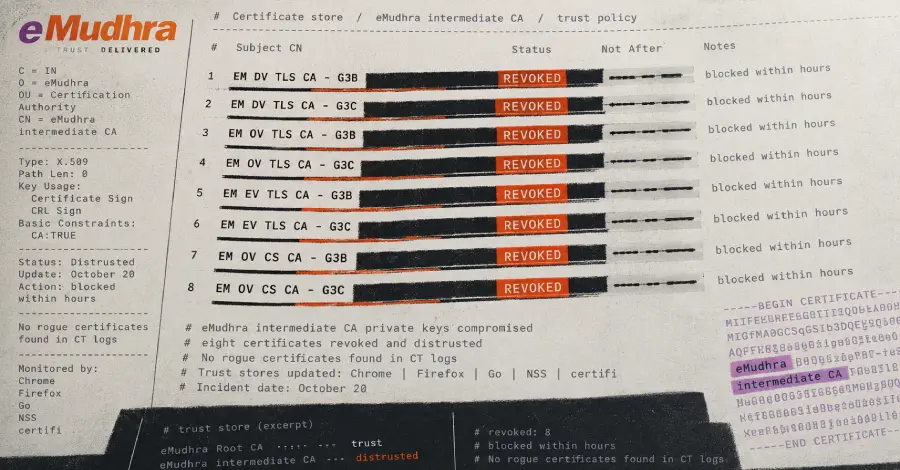 Eight eMudhra CA Keys Compromised, Prompting Emergency Patches Across Browsers
 Berlin AI Travel Platform YGO Secures €8 Million Series A Funding
Jessica Rusu, the FCA's Chief Data Officer, outlined proposals during a Monday speech that would mandate reporting of substantial AI-related incidents. Her comments add momentum to growing calls for tighter oversight of enterprise AI deployments across British industries.
Rusu emphasized that current voluntary reporting mechanisms fall short of providing regulators with adequate visibility into AI system performance. She argued that mandatory disclosure would help identify patterns in AI failures before they cause widespread harm to consumers and markets.
„The financial sector cannot afford to treat AI risks as a black box,”Rusu reportedly stated during her address. „We need structured reporting frameworks that capture both actual failures and close calls.”The FCA has observed increasing AI adoption among regulated firms, yet incident reporting remains inconsistent. Regulators worry that without standardized disclosure requirements, systemic vulnerabilities could emerge undetected.
What Constitutes a ' Significant' AI Failure?
Industry sources indicate that several major banks and insurance companies have already experienced notable AI malfunctions in recent months, though most incidents remain unreported publicly. These range from algorithmic trading errors to flawed credit scoring models.
Under the proposed framework, companies would need to define what qualifies as a significant AI failure based on factors including financial impact, customer harm, and operational disruption. Near-misses—instances where AI systems almost failed but recovered—would also require documentation.
Regulatory experts suggest that implementing such requirements could take 12 to 18 months once finalized. The European Union's AI Act already includes similar incident reporting obligations for high-risk AI systems, potentially influencing UK policy direction.
Financial institutions have expressed mixed reactions. Some welcome clearer guidelines, while others raise concerns about competitive sensitivity and liability exposure from increased transparency.
The Bank of England has separately been consulting on AI governance standards for financial services, indicating coordinated regulatory movement across multiple agencies.
Frequently Asked Questions
Looking ahead, mandatory AI incident reporting could reshape how companies develop, test, and deploy artificial intelligence systems. Early adopters may gain compliance advantages while latecomers face potential enforcement actions.
What triggers mandatory reporting under the proposal? Companies would report AI failures causing measurable financial loss, customer harm, or operational disruption, along with near-misses meeting predefined significance thresholds.
How does this compare to existing regulations? Unlike current voluntary frameworks, the proposal mirrors EU requirements under the AI Act, which mandates incident reporting for high-risk AI applications.
When might these rules take effect? Implementation timelines remain uncertain, but industry estimates suggest 12-18 months for finalization and rollout once proposals advance beyond consultation stages.